
Why use a temporary storage solution for your home
Why use a temporary storage solution for your home

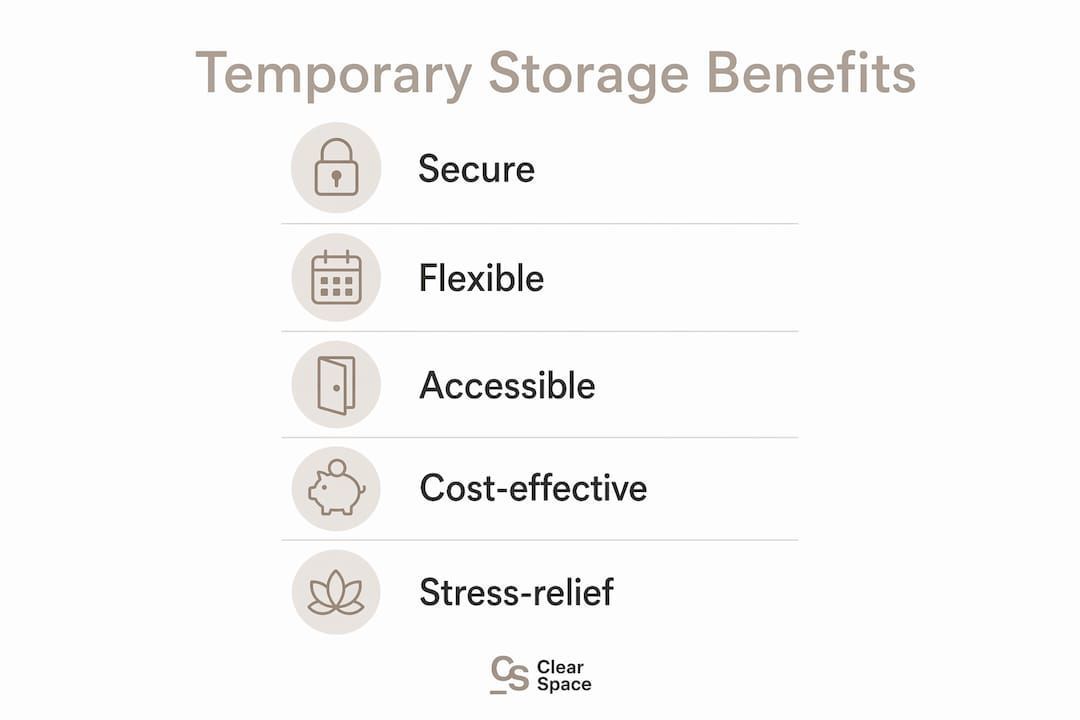
A temporary storage solution is a short-term, flexible arrangement for holding your belongings securely while your home is in transition. Whether you are moving house, managing a renovation, or working through a declutter, short-term self-storage gives you breathing room that a spare room simply cannot. Providers such as Red Rover Moving and Storage, Smaver, and Pyramid Logistics have all documented how flexible holding space reduces stress and protects belongings during these periods. The core benefits are consistent across every scenario: flexibility, security, and convenience.
Why use a temporary storage solution when moving house?
Moving timelines rarely align. Your move-out date arrives before your new home is ready, or your buyer wants to complete two weeks earlier than planned. Temporary storage bridges that gap, giving you a secure place to hold furniture and boxes without paying for a second property or cramming everything into a relative's garage.
The practical advantages of temporary storage for moving go beyond date gaps. Consolidating your belongings into one secure unit reduces double handling, which lowers the risk of damage and cuts the number of van trips. Fewer trips means less cost and less chaos on moving day itself.
Month-to-month rental terms are standard across most short-term storage providers. Varied unit sizes mean you can rent exactly the space you need, whether that is a few boxes of books or a full three-bedroom house worth of furniture. You are not locked into a six-month contract when you only need three weeks.
Key benefits of using temporary storage during a move:
- Bridges the gap between move-out and move-in dates without rushed decisions
- Reduces the number of times belongings are handled, lowering damage risk
- Allows gradual packing and unpacking at your own pace
- Frees up your new home so you can clean, paint, or recarpet before furniture arrives
- Removes pressure from tight completion deadlines
Pro Tip: Pack and label boxes by room and priority before they go into storage. Place items you will need first, such as bedding and kitchen essentials, at the front of the unit. You will save yourself a full unpack just to find the kettle.
If you want a practical checklist for what to put away first, Clearspaceherts has a useful guide on moving house storage priorities that is worth reading before you start packing.
Does temporary storage help during home renovations?
Temporary storage during a renovation does two things: it protects your belongings and it gives contractors a clear workspace. Dust, paint splatter, and accidental knocks from ladders are all genuine risks when furniture stays in a room being worked on. Portable containers parked on your driveway remove items from the work zone entirely, cutting the chance of damage and giving tradespeople room to work safely and quickly.
Renovation timelines are notoriously unpredictable. A kitchen refit planned for two weeks can stretch to five. Short-term storage with month-to-month flexibility means you are not penalised when the plasterer is delayed or the tiles arrive late. You extend the rental by a week and carry on.
On-site portable storage containers have a clear advantage over off-site self-storage during active renovation work. Access frequency drives the choice: if you need items daily or every few days, a container on your drive saves repeated trips across town. Off-site units work better for items you will not need until the project is finished.
Benefits of temporary storage during a renovation:
- Furniture and valuables stay free from dust, debris, and accidental damage
- Contractors have clear, safe working areas, which speeds up the job
- Flexible rental terms absorb delays without financial penalty
- On-site containers provide quick access to items needed during the project
- Reduces the need to move belongings repeatedly between rooms
Pro Tip: Before the work starts, sort your belongings into three groups: daily use items to keep at home, items needed occasionally during the project, and items that can go straight into storage until completion. This staging approach, recommended by MoveBuddha, reduces box re-openings and the stress that comes with them.
Clearspaceherts has written in detail about storage during home renovations if you want to go deeper on planning your space.
Comparing temporary storage options: which type suits you?
Three main types of temporary storage are available to homeowners and tenants in the UK. Each suits a different situation.

| Storage type | Best for | Access | Security | Flexibility |
|---|---|---|---|---|
| Portable container (on-site) | Renovations, short moves | Daily, on your property | Lockable unit, your key | Delivered and collected to order |
| Self-storage unit (off-site) | Longer gaps, larger volumes | During facility hours | CCTV, alarms, access codes | Month-to-month rentals common |
| Full-service storage | Busy households, fragile items | Arranged collection and delivery | Managed facility, inventory tracking | Higher cost, less DIY access |
Self-storage facilities typically offer the strongest security infrastructure. Controlled access, CCTV, and alarm systems are standard features at reputable facilities, designed to protect multiple independent renters simultaneously. Climate-controlled units are available at most larger sites and are worth considering for antiques, electronics, artwork, or documents.
Portable containers suit renovations and short moves well because they sit on your property. The trade-off is that they occupy driveway or garden space, and some local councils require a permit for containers on the public highway. Check before you book.
Full-service storage providers collect, store, and redeliver your belongings. This option costs more but removes all physical effort. It suits households with fragile or high-value items, or people who simply cannot manage the logistics themselves. Clearspaceherts offers flexible storage options in Hertfordshire with rental terms designed around your timeline rather than a fixed contract.
When else does temporary storage make sense?
Temporary storage is not only for moves and renovations. Several other situations make short-term storage a practical choice.
Downsizing and decluttering. When you are reducing the size of your home, decisions about what to keep, sell, or donate take time. Temporary storage lets you stage items safely while you work through those decisions without living in a cluttered house. Rushing that process leads to regret; storage removes the pressure.
Staging a property for sale. Estate agents consistently advise decluttering before viewings. Removing excess furniture makes rooms look larger and helps buyers picture themselves in the space. A short-term unit holds the overflow while the property is on the market.
Students and seasonal needs. University students returning home for summer need somewhere for their belongings that is not a parent's hallway. Short-term units sized for a student room are widely available and cost far less than paying rent on an empty flat.
Commercial and business use. Small businesses relocating offices or managing a fit-out face the same timing problems as homeowners. Temporary warehousing creates breathing room between delivery schedules and site readiness, keeping operations organised during the transition.
Matching storage size to your actual need saves money. Most providers offer units from small lockers to large rooms. Measure your items before booking and ask the provider to recommend a size. Overestimating by one unit size is a common and avoidable cost.
Key takeaways
Temporary storage works because it separates the timing of your move or project from the physical reality of your belongings, giving you control over both.
| Point | Details |
|---|---|
| Bridges timing gaps | Secure short-term storage removes pressure when move-out and move-in dates do not align. |
| Protects belongings during renovations | Removing items from work zones prevents dust damage and gives contractors clear space. |
| Flexible rental terms | Month-to-month options mean you only pay for the time you actually need. |
| Security is built in | Reputable facilities use CCTV, alarms, and access codes to protect stored goods. |
| Matches multiple scenarios | Storage supports moves, renovations, downsizing, property sales, and business transitions. |
What I have learnt from helping people through home transitions
The single most underestimated benefit of temporary storage is how much it reduces handling. Every time a box or piece of furniture is moved, the risk of damage increases. Clients who plan their storage well, separating what they need immediately from what can wait, handle each item far fewer times. That alone saves money on replacements and repairs.
The second thing I have noticed is that people consistently underestimate how long they will need storage. A renovation planned for three weeks rarely finishes in three weeks. A house sale that looks certain in week one can fall through in week four. Month-to-month rental terms exist precisely because life does not follow a schedule. Book flexible terms from the start and do not let an optimistic timeline push you into a fixed contract.
Access planning matters more than most people realise. If you store items off-site and then discover you need your router, your work laptop, or your child's school uniform, an unplanned trip to a storage facility at 7am is nobody's idea of a good morning. Think through what you genuinely might need during the storage period before you seal the boxes. The staged packing approach is not just about organisation. It is about avoiding that exact situation.
Temporary storage is not a luxury. For anyone managing a move, a renovation, or a significant declutter, it is one of the most practical tools available. The cost of a storage unit for a month is almost always less than the cost of a damaged sofa, a rushed decision, or a move that falls apart because the dates did not line up.
— Ashlea
Clearspaceherts: local storage and home support across Hertfordshire
Clearspaceherts provides flexible, secure storage for homeowners and tenants across Hertfordshire, including St Albans, Harpenden, Hemel Hempstead, and Welwyn Garden City. Rental terms are month-to-month, so you are never locked in longer than your situation requires.
Storage is only part of what Clearspaceherts offers. The team also provides packing support, moving help, decluttering, and end of tenancy cleaning in Hertfordshire, which means you can coordinate multiple services through one local provider rather than managing several separate companies. For tenants preparing to leave a property, combining storage with a professional clean simplifies the whole process. Get in touch with Clearspaceherts to discuss what your situation needs.
FAQ
What is a temporary storage solution?
A temporary storage solution is a short-term rental arrangement for holding belongings securely outside your home. Options include self-storage units, portable containers, and full-service storage, all available on flexible terms.
How long can you rent temporary storage?
Most providers offer month-to-month rental terms with no fixed minimum beyond the first month. This suits moves, renovations, and decluttering projects where the timeline is uncertain.
Is temporary storage secure?
Reputable self-storage facilities use CCTV, alarms, and access codes to protect stored goods. Climate-controlled units are available for sensitive items such as electronics, documents, and antiques.
What is the difference between portable storage and self-storage?
Portable containers are delivered to your property and suit frequent access during renovations. Self-storage units are held off-site at a facility and work better for longer-term storage or larger volumes of belongings.
Can temporary storage help during a home renovation?
Temporary storage during a renovation protects furniture from dust and damage and gives contractors a clear workspace. Flexible rental terms mean you can extend the arrangement if the project runs over schedule.