
Stress free moving home tips: your 2026 guide
Stress free moving home tips: your 2026 guide

Stress free moving home tips are practical strategies designed to reduce anxiety and simplify every stage of your relocation, from the first box you pack to the moment you put the kettle on in your new kitchen. Moving house consistently ranks as one of life's most stressful events, yet most of that stress is avoidable with the right preparation. Experts including Marty Stevens-Heebner and insights from Psychreg confirm that planning, decluttering, and clear organisation are the three pillars of a smooth move. This guide gives you a step-by-step approach to each stage, so you arrive at your new home feeling in control rather than exhausted.
How does early planning and decluttering reduce moving stress?
Starting your planning 6–8 weeks before your move date is the single most effective thing you can do. That window gives you time to book removal help, sort utilities, and work through your belongings without panic. Leave it to the last fortnight and you will almost certainly face rushed decisions, emergency costs, and frayed nerves.
Decluttering is where most people save the most time and money. Removing items unused for over a year cuts the physical load on moving day and reduces the volume you need to pack, transport, and unpack. The keep, donate, discard method works well: handle each item once and place it in one of three piles. If you find decisions hard, set a timer for 20 minutes per room. That limit prevents the decision fatigue that turns a productive afternoon into a stressful one.
Organisation tools make a real difference once decluttering is underway. A central move hub, whether a dedicated folder, a notes app, or a shared document, keeps contracts, checklists, and booking confirmations in one place. You stop hunting for information and start making decisions faster.
Breaking the process into weekly milestones is more effective than writing one enormous to-do list. Weekly milestones give you a clear sense of progress and prevent the feeling that everything needs doing at once. A simple structure might look like this:
- Weeks 6–8: Declutter room by room and book removal help or packing support.
- Weeks 4–5: Source packing materials, notify utilities, and update your address with banks and subscriptions.
- Weeks 2–3: Begin packing non-essential rooms and confirm all bookings.
- Week 1: Pack everyday items, prepare your essentials box, and do a final walkthrough.
Pro Tip: Time-box each planning session to 30 minutes. Set a timer, work only on that session's task, then stop. Short focused sessions beat long unfocused ones every time.
For a detailed pre-move checklist, Clearspaceherts has put together a practical moving day checklist covering everything you need to sort before the van arrives.
What are the most effective packing strategies for a stress free move?
Packing is where most moves go wrong. Poor packing leads to broken belongings, wasted time on moving day, and hours of confusion when you are trying to find the tin opener at 9pm.
Start with the rooms you use least
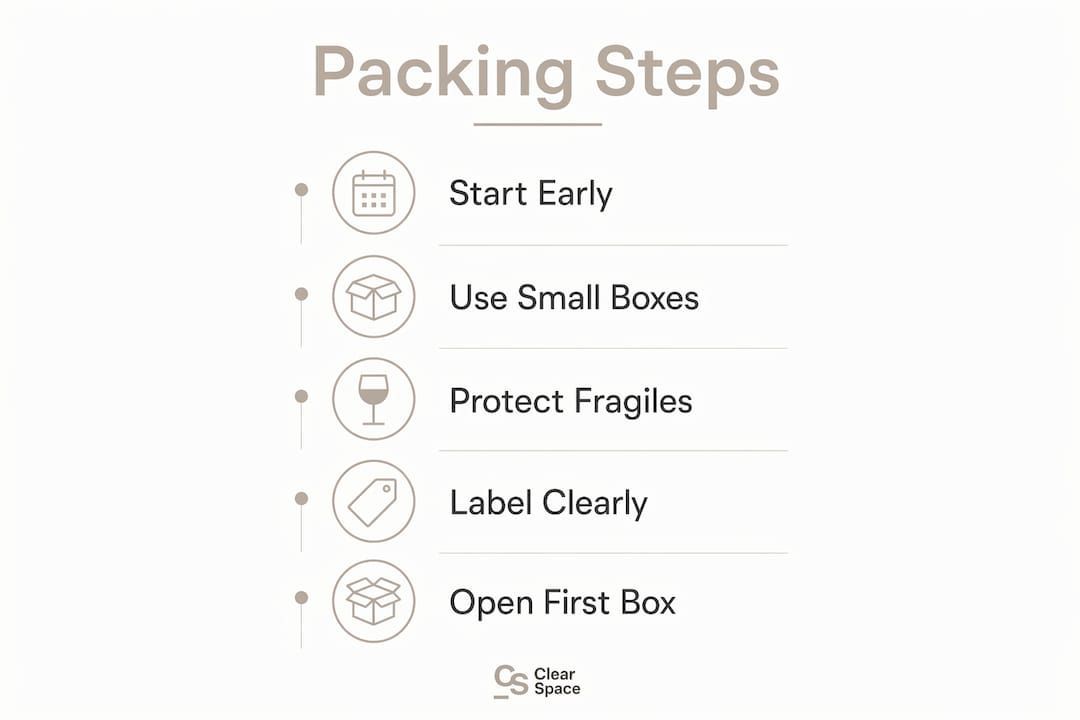
Starting with little-used rooms first, such as the spare bedroom, loft, or garage, creates momentum without disrupting daily life. Work forward room by room until you reach the kitchen and bedroom in the final days. This approach keeps your home functional for longer and prevents the demoralising feeling of living in a half-packed house for weeks.
Box sizes and weight matter more than you think
Use small boxes for heavy items like books and crockery. Large boxes packed with heavy items become impossible to lift safely and are a common cause of injury. Reserve large boxes for lightweight bulky items such as duvets, cushions, and lampshades.
Protecting breakables
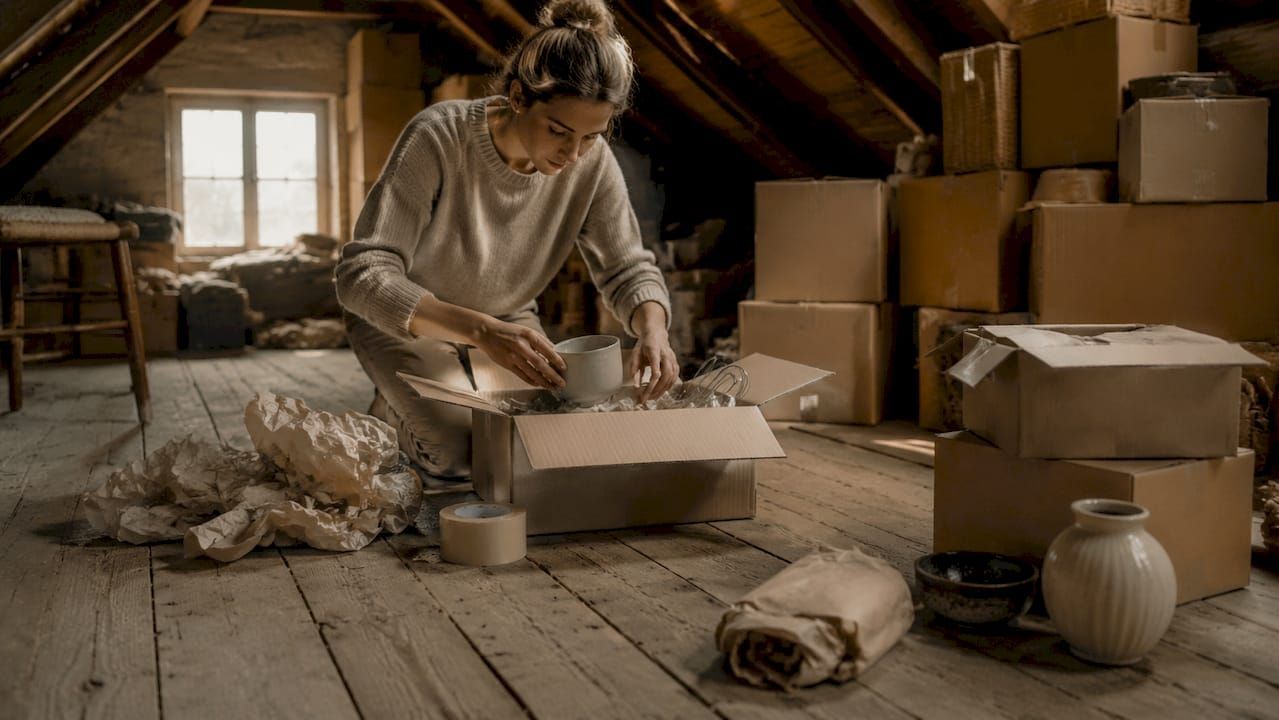
Two packing techniques protect fragile items better than any amount of bubble wrap alone. Pack plates vertically on their edge rather than stacking them flat. Vertical packing reduces vibration damage during transport significantly. For bathroom liquids, place plastic wrap under caps before closing the bottle. This creates an airtight seal and prevents leaks from ruining other items in the box.
Labelling: the step most people rush
Label every box with its destination room and a brief description of contents. Write on the sides of boxes, not just the top. When boxes are stacked, the top label is hidden. Label fragile boxes on multiple sides so movers can see the warning regardless of how the box is positioned.
| Packing mistake | Better approach |
|---|---|
| Stacking plates flat | Pack plates vertically on their edge |
| Heavy items in large boxes | Use small boxes for books and crockery |
| Labelling only the top | Write on two or three sides of every box |
| Leaving liquids unsealed | Wrap caps in plastic wrap before packing |
| No essentials box | Pack a clearly marked "open first" box |
Pro Tip: Pack a clearly labelled "open first" box for each person in the household. Include bedding, a phone charger, toiletries, a change of clothes, and basic kitchen supplies. This box travels in the car with you, not on the van.
If you are unsure whether to hire professional packing help, Clearspaceherts explains why you do not need a traditional removal company for packing support.
How to manage moving day for minimal stress
Moving day feels chaotic because too many things happen at once. The people who handle it calmly are the ones who prepared for that chaos in advance.
Follow these steps to keep the day under control:
- Eat a proper breakfast before anyone arrives. Low blood sugar makes every small problem feel bigger than it is.
- Have your "open first" box in the car before the van is loaded. Packing essentials separately means you are not hunting through boxes for bedding at midnight.
- Brief your movers or helpers at the start of the day. Walk them through the labelling system and point out any fragile items.
- Keep all important documents, keys, and valuables with you personally. Do not put passports or financial documents on the van.
- Build in two short breaks during the day. Fifteen minutes to sit down and eat something prevents the exhaustion that leads to mistakes.
- Protect your sleep window the night before and after the move. Sleep deprivation reduces your ability to solve problems flexibly, and moving day always produces at least one unexpected problem.
Pro Tip: Write a one-page instruction sheet for your movers. Include the floor plan of the new property, which boxes go where, and any items that need special handling. Hand it over at the start of the day and you will answer far fewer questions.
For guidance on whether to handle the move yourself or bring in professionals, DIY versus professional moving is worth reading before you commit to either option.
Post-move tips to settle in without the stress continuing
The move itself is over, but the adjustment period is real. Many people feel flat or unsettled in the first week, even when the move went well. That is normal, and it passes faster when you approach it deliberately.
- Set up your bedroom first. A made bed and a familiar duvet make the new space feel like home faster than any amount of unpacking.
- Unpack by priority, not by room. Start with the items you use every day: kitchen basics, bathroom essentials, and work equipment.
- Maintain small daily routines such as a morning walk or an evening cup of tea. Familiar habits anchor your mental state when everything else feels unfamiliar.
- Resist the urge to unpack everything in the first 48 hours. Spreading unpacking over a week reduces fatigue and gives you time to decide where things actually belong in the new space.
- Schedule one low-key social activity in the first week. Seeing a friend or neighbour gives you something to look forward to and breaks the isolation that an empty house can create.
Patience matters here. Settling into a new home takes time, and giving yourself permission to adjust gradually is one of the most practical moving home stress reduction tips you can apply.
Key takeaways
A smooth move depends on starting early, decluttering thoroughly, packing with care, and protecting your wellbeing on the day itself and in the days that follow.
| Point | Details |
|---|---|
| Start 6–8 weeks early | Early planning prevents last-minute costs and rushed decisions. |
| Declutter before you pack | Removing unused items cuts your load and reduces moving costs. |
| Pack strategically | Use correct box sizes, vertical plate packing, and clear labelling on multiple sides. |
| Prepare an essentials box | Pack bedding, toiletries, and kitchen basics to travel with you, not on the van. |
| Protect your sleep and routines | Guarding sleep and daily habits reduces stress before, during, and after the move. |
What I have learned from helping people move
Moving house is one of those experiences where the practical and the emotional are completely tangled together. You are not just shifting furniture. You are leaving a place that holds memories, and arriving somewhere that does not yet feel like yours. That tension is real, and no checklist fully resolves it.
What I have seen time and again is that the people who struggle most are not the ones with the most to move. They are the ones who tried to do everything alone and left it too late. The ones who cope best ask for help early, whether that means a friend with a van, a professional packer, or simply someone to sit with them while they decide what to keep.
The flexible mindset matters more than people expect. Moving day will not go exactly to plan. Something will be delayed, mislabelled, or forgotten. The people who treat that as a normal part of the process rather than a catastrophe finish the day in far better shape. Build in buffer time, expect the unexpected, and give yourself credit for how much you have already handled.
Self-compassion is not soft advice. It is practical. When you are tired and surrounded by boxes, being kind to yourself keeps you functional. That is what gets the bed made and the kettle on.
— Ashlea
How Clearspaceherts can take the pressure off your move
Moving house involves more tasks than most people anticipate until they are in the middle of it. Clearspaceherts offers moving home help across Hertfordshire, covering packing support, decluttering, property clearance, and end of tenancy cleaning, all from one local team.
Working with one company across multiple tasks means fewer calls to make, fewer strangers in your home, and a single point of contact who knows your situation. Whether you need help clearing a property before you leave, packing up a room you have not touched in years, or a thorough end of tenancy clean in Hertfordshire, Clearspaceherts handles it. The team works across St Albans, Harpenden, Hemel Hempstead, Welwyn Garden City, Hatfield, and surrounding areas. Find out more about using one company for your move and how it simplifies the whole process.
FAQ
How far in advance should I start planning a move?
Start planning 6–8 weeks before your move date. This gives you enough time to declutter, book help, and sort utilities without last-minute pressure.
What should go in an "open first" box?
Pack bedding, toiletries, a phone charger, a change of clothes, and basic kitchen supplies. These essentials mean you can function comfortably on the first night without unpacking the entire van.
How do I stop feeling overwhelmed during a move?
Break the process into weekly milestones and use a central hub such as a folder or app to keep all documents in one place. Time-boxed planning sessions prevent decision fatigue from building up.
Is it worth hiring professional packing help?
Professional packing support saves time, reduces breakages, and takes significant pressure off moving day. Clearspaceherts offers packing and moving support across Hertfordshire for homeowners who want practical help without committing to a full removal company.
How long does it take to feel settled after moving?
Most people need several weeks to feel fully at home in a new property. Maintaining daily routines and scheduling social contact in the first week both speed up the adjustment process considerably.