
What is a combined moving service? Your 2026 guide
What is a combined moving service? Your 2026 guide

A combined moving service is defined as one company managing packing, transport, storage, and final delivery of your belongings under a single contract and coordinated plan. This model, often called a full service move, eliminates every handoff point between separate moving and storage vendors. The result is fewer opportunities for items to be lost, damaged, or delayed. For anyone planning a relocation in 2026, understanding what is a combined moving service is the clearest way to decide whether it suits your situation.
What is a combined moving service and how does it work?
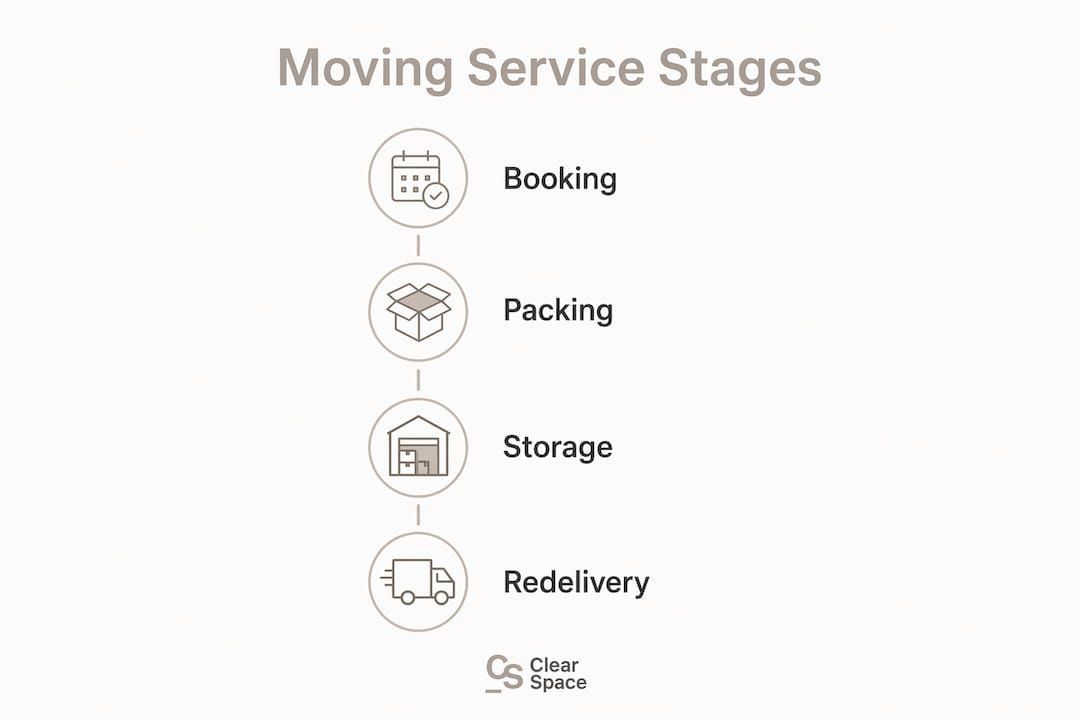
A combined moving service operates through four distinct stages, each managed by the same provider. That continuity is the defining feature. Most separate arrangements hand your belongings from one company to another at least twice, and each handoff is a point where things go wrong.
Stage 1: Booking and planning
The process begins with a single bundled quote covering every element of your move. You agree on dates, storage duration, and delivery window in one conversation. This replaces the multiple calls, separate contracts, and conflicting schedules that come with using independent movers and storage firms.
Stage 2: Packing and initial move
The same crew arrives to pack and load your belongings. They generate an inventory list at this stage, which travels with your items throughout the entire process. Inventory documentation should stay consistent from pickup through storage to final delivery, with a master list referenced at every phase to prevent lost items. This is not a minor administrative detail. It is the mechanism that keeps your belongings accountable.

Stage 3: Secure storage
Your belongings move into the provider's facility, ideally one they own or directly manage. Climate control in storage is a critical quality factor. Non-controlled warehouses risk moisture, rust, and mould damage to electronics, wooden furniture, and other sensitive items. Some providers include one month of storage within the base package price, with flexible extensions available beyond that.
Stage 4: Final redelivery
The same team that packed your home delivers your belongings to your new address. Continuity of custody means the crew already knows how items were packed and where fragile pieces are located. That knowledge reduces preventable damage on delivery day.
Pro Tip: Ask your provider upfront whether retrieval fees apply if you need to access items during the storage period. These charges are not always included in the initial quote.
What are the key benefits of combined moving options?
The advantages of a combined approach over separate services are practical and measurable. They fall into five clear categories.
- Cost savings. Combined services are typically 10–20% more cost-effective than using separate vendors, due to bundled pricing and reduced transport and administration overhead. That saving comes from consolidation, not compromise.
- Time savings. You manage one contract, one scheduling timeline, and one point of contact. Coordinating separate movers and storage firms means double the admin and double the risk of scheduling conflicts.
- Reduced damage risk. Using a single provider reduces handling by half compared to using separate movers and storage suppliers. Fewer handoffs mean fewer opportunities for breakages, scratches, or missing items.
- Better organisation. A unified inventory list, maintained from packing to delivery, gives you a clear record of every item. This matters most when you need to make an insurance claim or locate a specific box during storage.
- Simpler problem resolution. When one company manages everything, there is no finger-pointing between a mover and a storage firm if something goes wrong. You have one contract and one accountable party.
Cost, risk, and organisational ease are the primary drivers for choosing combined moving services. Each benefit compounds the others: fewer handoffs lower costs, and lower costs make the service accessible to more movers.
What types of combined moving services are available?
Not all combined moving services are structured the same way. The differences matter when you are evaluating risk and cost.
| Service type | Custody chain | Best suited for |
|---|---|---|
| Full-service integrated move | Provider owns warehouse and manages all stages directly | Movers with high-value items or long storage periods |
| Hybrid combined move | Portable container plus professional loading and unloading | Budget-conscious movers needing flexibility |
| Referral-based combined service | Moving firm subcontracts storage to a third party | Short-term storage with lower volume |
Full-service integrated moves are the gold standard. True integrated combined moving means the moving company owns or directly manages the warehouse. Third-party referrals create handoffs, and handoffs increase the risk of inventory discrepancies and damage claims. Always ask whether the storage facility is owned by the provider or managed through a partner.
Hybrid combined moves use portable storage containers alongside professional loading and unloading crews. Hybrid options with portable containers provide professional safety at more accessible price points. This shows that combined moving is no longer exclusive to large budgets. A mover with a modest volume of belongings can still benefit from professional handling and secure storage without paying for a full-service package.
Referral-based services look like combined moves on the surface but involve a handoff to a separate storage operator. The risk profile is closer to using two separate companies. If continuity of custody matters to you, this option is the weakest of the three.
Pro Tip: When comparing quotes, ask directly: "Do you own the storage facility?" A yes confirms integrated custody. A no means you should ask for the subcontractor's name and insurance details.
What should you check before booking a combined moving service?
Choosing the right service requires asking specific questions before you sign anything. The following checklist covers the areas where movers most often encounter problems.
- Climate control. Confirm whether the storage facility is temperature and humidity controlled. Climate control is non-negotiable for electronics, wooden furniture, and other sensitive items. Lack of it often results in costly damage during longer storage stays.
- Inventory documentation. Ask how the inventory list is created and whether you receive a copy at each stage. Digital or physical master inventory lists improve accountability and give you a reference point if anything goes missing.
- Retrieval fees. Hidden fees like retrieval or labour charges to access stored items can affect your final costs significantly. A quote that looks competitive may carry extra charges you only discover when you need something back.
- Insurance and liability. Check what the provider's insurance covers, particularly for high-value items. Standard liability limits are often lower than the replacement cost of electronics or antiques. Ask whether you need supplementary cover.
- Timing flexibility. Confirm whether you can extend your storage period at short notice and what the cost is. Completions slip. Your storage arrangement needs to accommodate that reality without penalty.
Knowing how to arrange storage between house moves before you commit to a provider protects you from the most common and avoidable problems. A good provider will answer every question on this list without hesitation.
Key takeaways
A combined moving service reduces cost, damage risk, and scheduling complexity by keeping your belongings under one provider's custody from packing through to final delivery.
| Point | Details |
|---|---|
| Single contract model | One provider manages packing, storage, and delivery, removing all handoff risks. |
| Continuity of custody | The same crew handles belongings throughout, reducing damage and inventory errors. |
| Climate control matters | Verify temperature and humidity control before booking, especially for sensitive items. |
| Check facility ownership | Providers who own their warehouse offer stronger custody than referral-based services. |
| Clarify all fees upfront | Retrieval charges and extended storage costs must be confirmed before signing. |
Why continuity matters more than price
The question I hear most often is: "Is a combined service really worth the extra cost?" My honest answer is that the framing is wrong. The real question is what you are paying for when you use two separate companies.
When I speak with people who have had belongings damaged or lost during a move, the problem almost always happened at a handoff. A box left at a storage facility by one crew, collected by another, and delivered by a third is a box that nobody fully owns responsibility for. A combined service removes that ambiguity entirely.
The cost argument also shifts when you factor in the admin time saved. Coordinating two separate providers, managing two sets of dates, and resolving disputes between them when something goes wrong is not free. It costs you time and stress that rarely appears in a price comparison.
The one area where I would urge caution is the word "combined" itself. Not every provider using that term offers true integrated custody. Some are simply movers who have a referral arrangement with a storage firm. Ask the direct question about facility ownership. The answer tells you everything about the service you are actually buying.
Affordable combined moving is genuinely available now, particularly through hybrid container-based options. The benefits of using one company apply at every budget level. You do not need a large or expensive move to benefit from a single accountable provider.
— Ashlea
Moving in Hertfordshire? Clearspaceherts can help
Clearspaceherts provides moving home help across Hertfordshire, covering packing support, secure storage, and redelivery as part of a joined-up service. As a local, family-run business working across St Albans, Harpenden, Hemel Hempstead, Welwyn Garden City, and Hatfield, the team manages your belongings from start to finish under one plan.
If you are also leaving a rental property, Clearspaceherts offers end of tenancy cleaning in Hertfordshire alongside moving support, so you can handle both in one arrangement. Get in touch to discuss your move dates and storage requirements with a team that knows Hertfordshire properties well.
FAQ
What is the difference between a combined and a full service move?
A full service move covers packing, loading, and delivery. A combined moving service adds secure storage between those stages, all managed by the same provider under one contract.
How long can I store belongings with a combined moving service?
Storage durations vary by provider. Some include one month in the base package, with flexible extensions available. Confirm the terms and any additional costs before booking.
Is a combined moving service more expensive than using separate companies?
Combined services are typically 10–20% more cost-effective than separate vendors due to bundled pricing and reduced handling. The saving comes from consolidation across transport, storage, and administration.
What should I ask a provider before booking?
Ask whether they own the storage facility, whether climate control is in place, what the inventory process looks like, and whether retrieval fees apply during the storage period.
Are combined moving services available for smaller moves?
Yes. Hybrid options using portable containers with professional loading provide the benefits of combined custody at accessible price points, making this approach practical for moves of any size.