
What is a storage solution? A guide for homeowners
What is a storage solution? A guide for homeowners
A storage solution is any system, product, or method designed to organise, protect, and store belongings while maximising the space available in a home. The term covers everything from a simple basket on a shelf to a fully planned room layout with built-in cabinetry. People lose an average of 2.5 days per year searching for misplaced items. That figure alone shows why a well-planned storage system is not a luxury but a practical necessity. Whether you own your home or rent it, the right approach to storage transforms how a space feels and functions.
What is a storage solution and why does it matter?
A storage solution is defined as any arrangement that gives every item a designated place, making retrieval quick and protecting belongings from damage. The three core purposes are creating order from clutter, protecting items from wear or loss, and making sure you can find things without searching. These purposes apply equally in a two-bedroom flat in Harpenden and a four-bedroom house in St Albans.
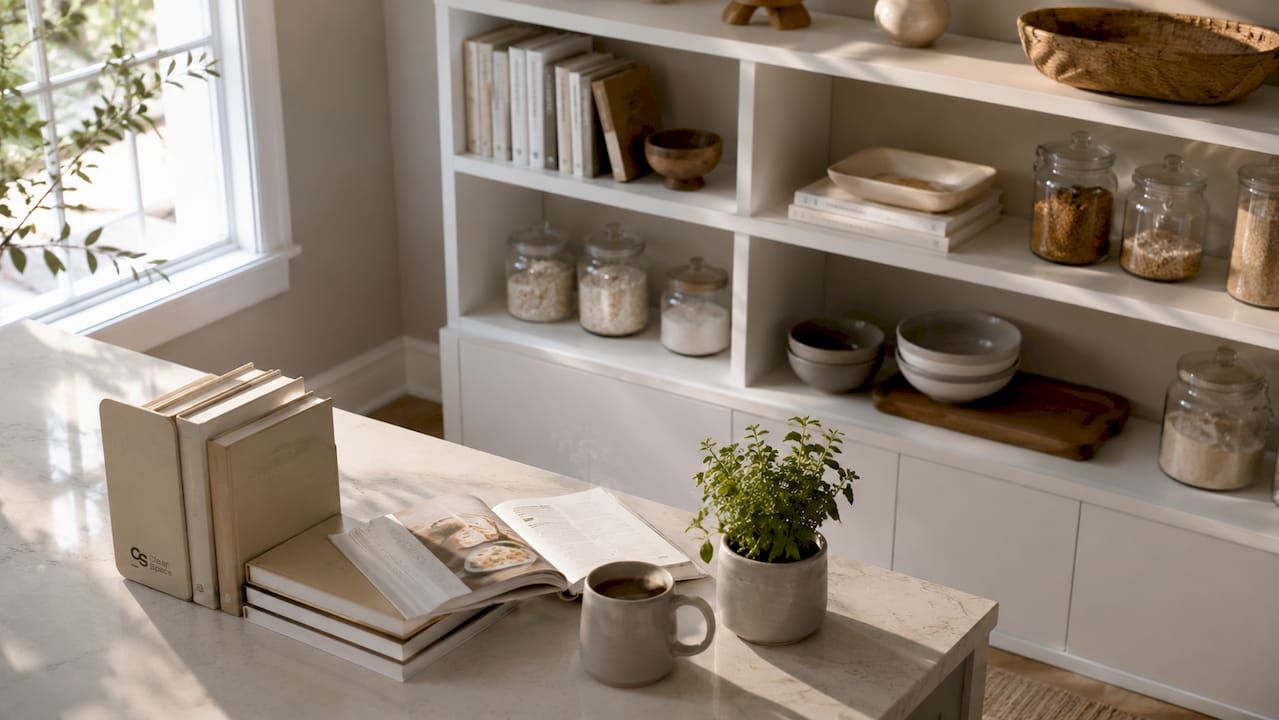
Effective storage also has a direct effect on how a home feels. A room with clear surfaces and organised shelving reads as larger and calmer than the same room with items piled on every surface. The benefits of storage solutions go beyond tidiness. They reduce daily stress, save time, and can even add value to a property when done well.
For renters, the stakes are slightly different. Permanent fixtures are often off the table, so the choice of storage system must work within the constraints of a tenancy agreement. That makes the selection of the right type of storage even more important from the start.
What types of storage solutions are commonly used in homes?
Physical storage falls into several broad categories, each suited to different spaces and needs.
- Shelving units are the most versatile option. Freestanding units require no fixings and move with you when you leave a rental property.
- Baskets and boxes sit on shelves or under beds and keep loose items grouped without the need for drawers.
- Multi-purpose furniture such as storage ottomans, beds with built-in drawers, and benches with lift-up lids add storage without adding footprint.
- Wall-mounted racks and hooks use vertical space that would otherwise go unused. In a kitchen, a wall-mounted rail for utensils frees up an entire drawer.
- Over-the-door organisers are the go-to renter-friendly option because they require no drilling and leave no marks.
- Floating shelves can be installed with damage-free adhesive strips in lighter configurations, making them suitable for most rental properties.
The right type depends on three factors: the size of the space, how often you need to access the items stored, and whether the solution needs to be reversible. A small home storage guide will typically prioritise vertical space and multi-purpose pieces over large freestanding units that eat into floor area.
Pro Tip: Before buying any storage product, measure the space three times. A unit that is two centimetres too wide for an alcove is useless, no matter how well it is designed.
What key principles drive effective storage in small spaces?
The most effective storage systems follow a set of clear principles rather than relying on buying more containers. Understanding these principles saves money and produces better results.
-
Use vertical space. Walls are the most underused storage surface in most homes. Vertical wall space and the backs of doors can hold a significant volume of items without reducing floor area at all.
-
Zone by frequency of use. Daily items belong at eye level or within easy reach. Seasonal items, spare bedding, and rarely used equipment belong in higher, deeper, or less accessible spots. Storing by frequency rather than category is the single biggest shift that improves a storage system.
-
Declutter before you organise. Buying storage containers before decluttering leads to storing clutter more efficiently rather than creating functional space. The declutter step must come first, every time.
-
Blend storage with décor. Design-led storage that fits the visual style of a room reduces the sense of visual clutter. Open shelving styled with books and plants, or wicker baskets in a neutral tone, serve a storage function while contributing to the room's appearance.
-
Choose sustainable options where possible. Repurposing existing boxes and furniture aligns with circular economy principles and avoids the accumulation of mass-produced plastic organisers that rarely last more than a year or two.
Pro Tip: The under-bed area in a standard double bed holds the equivalent of a large chest of drawers. Flat storage boxes on wheels make this space genuinely usable rather than a dust trap.
Applying these principles consistently produces a storage system that works with your daily routine rather than against it. The goal is not a perfectly styled home. The goal is a home where you can find what you need in under thirty seconds.
How to plan and implement a home storage project
A storage project done without a plan tends to produce more clutter, not less. A structured approach avoids that outcome.
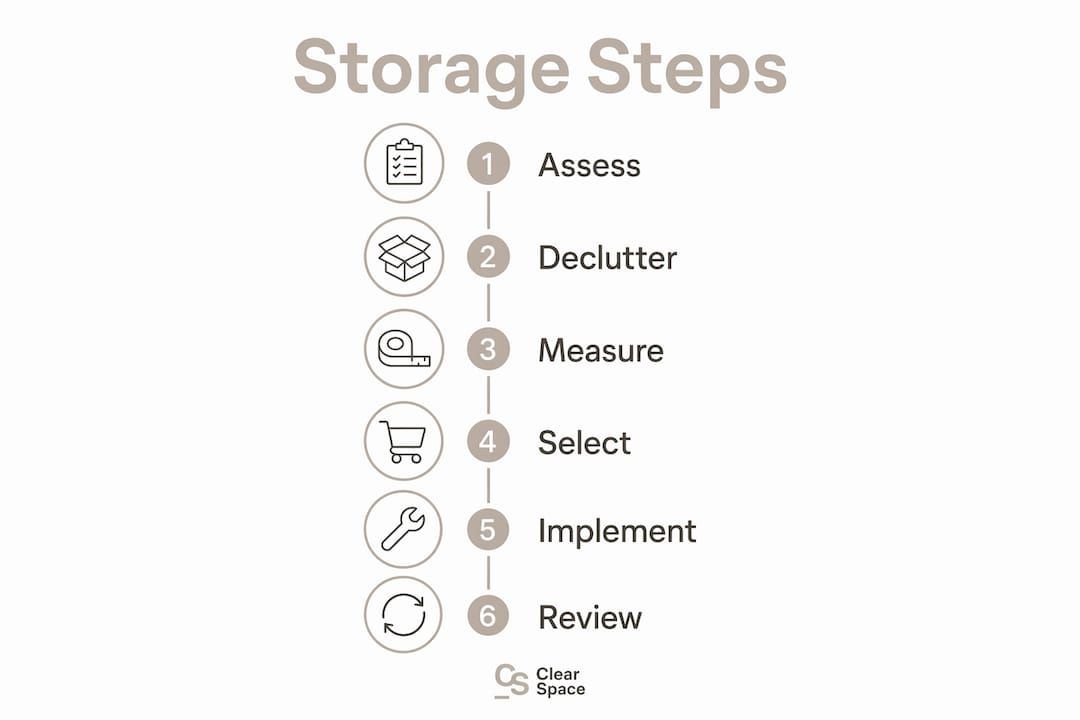
Step one: assess your pain points. Walk through each room and note where clutter accumulates. These spots reveal where your current system is failing. Common problem areas include hallway floors, kitchen worktops, and the space under the stairs.
Step two: declutter ruthlessly. Remove everything from the area you are working on. Sort into keep, donate, and discard. Only items in the keep pile need a storage solution. Experts stress decluttering as a necessary first step before buying anything.
Step three: measure and select. Measure the space accurately, then choose storage products that fit both the dimensions and the frequency of use principle. For renters, confirm that any wall-mounted option is permitted under your tenancy agreement or use damage-free alternatives.
Step four: implement and label. Put the system in place and label containers clearly. Labels are not just for children's bedrooms. They make a system maintainable by everyone in the household.
Step five: review after four weeks. A storage system that nobody uses is not a solution. After a month, check which areas are working and which are reverting to clutter. Adjust accordingly.
| Stage | Renter consideration | Homeowner consideration |
|---|---|---|
| Assessment | Check tenancy agreement for restrictions | No restrictions on fixtures |
| Decluttering | Same process applies | Same process applies |
| Product selection | Prioritise freestanding and damage-free | Full range of options available |
| Installation | Avoid permanent fixings without permission | Built-in options are viable |
| Review | Ensure reversibility before next tenancy | Focus on long-term durability |
Storage solution examples that work room by room
Concrete examples make the principles above easier to apply. These are drawn from the most common rooms where storage problems arise.
- Kitchen: Wire racks and lazy Susans inside cabinets eliminate the need to unstack items to reach what is at the back. A wall-mounted magnetic knife strip replaces a bulky knife block and frees up worktop space.
- Bedroom: A bed frame with built-in drawers replaces the need for a separate chest of drawers in a small room. Floating shelves above a desk create display and storage space without using floor area.
- Living room: A storage ottoman serves as a coffee table, a footrest, and a place to store throws, board games, or children's toys. A media unit with closed doors keeps cables and equipment out of sight.
- Hallway: A narrow bench with hooks above and a shelf below handles coats, bags, shoes, and post in one unit. Over-the-door hooks on the inside of a coat cupboard door double the hanging capacity without any additional furniture.
- Under the stairs: This dead space is one of the most valuable in a home. Pull-out drawers, open shelving, or a fitted cupboard can hold cleaning equipment, shoes, or a home office setup depending on the household's needs.
The pattern across all these examples is the same. Each solution targets a specific problem, fits the dimensions of the space, and keeps frequently used items accessible. For more inspiration on applying these ideas, home organisation tips from the removals and organisation sector offer a useful external perspective.
Key takeaways
Effective storage begins with decluttering first, then selecting solutions that match your space, your daily routine, and your tenancy status.
| Point | Details |
|---|---|
| Define the purpose first | A storage solution organises, protects, and makes items easy to retrieve. |
| Declutter before buying | Purchasing containers before removing unwanted items stores clutter, not space. |
| Zone by frequency | Keep daily items at eye level and seasonal items in harder-to-reach spots. |
| Match solutions to tenancy | Renters should prioritise freestanding and damage-free options throughout. |
| Blend function with design | Storage that fits the room's aesthetic reduces visual clutter as well as physical clutter. |
Why I think most people approach storage the wrong way
People tend to reach for storage products before they have done the hard work of deciding what actually needs to be stored. I have seen this pattern repeatedly. Someone buys a set of matching boxes, fills them with items they have not looked at in three years, and then wonders why the room still feels cluttered. The boxes are tidy. The problem is not solved.
The uncomfortable truth is that most homes do not need more storage. They need less stuff. Once you have genuinely reduced what you own to what you use and value, the storage requirement often drops by a third or more. The solutions you then need are simpler, cheaper, and easier to maintain.
The second mistake I see is prioritising appearance over accessibility. A beautifully styled shelf that requires you to move five things to reach what you actually want is not a functional storage system. It is a display. Real storage puts the things you use most within arm's reach and hides the things you rarely need.
Sustainability matters here too. Buying a set of matching plastic bins feels productive, but those bins often end up in landfill within two years when the household's needs change. Repurposing a wooden crate, a vintage suitcase, or a set of old drawers creates storage that lasts and adds character to a room rather than making it look like a storage catalogue.
My honest advice: spend twice as long decluttering as you think you need to, then buy half as much storage as you think you need. You will almost certainly get it right.
— Ashlea
How Clearspaceherts can help you create real space at home
Clearspaceherts works with homeowners, renters, landlords, and letting agents across Hertfordshire to make the process of organising and clearing a property straightforward. Whether you need help with a full house clearance in Hertfordshire or support preparing a rental property between tenancies, the team handles the practical side so you do not have to.
For landlords, the landlord property services cover clearance, cleaning, and preparation in one visit, reducing void periods and the stress of coordinating multiple contractors. For homeowners and renters working through a declutter or a move, Clearspaceherts provides packing support, storage assistance, and home organisation help tailored to the property and the situation. The team covers St Albans, Harpenden, Hemel Hempstead, Welwyn Garden City, Hatfield, and surrounding areas.
FAQ
What is a storage solution in simple terms?
A storage solution is any product, system, or method that gives your belongings a designated place, making them easy to find and protecting them from damage. Examples include shelving units, storage ottomans, and over-the-door organisers.
What are the best storage solutions for renters?
Renters benefit most from freestanding shelving, over-the-door hooks, and storage furniture such as ottomans and beds with built-in drawers, as these options require no permanent fixings and leave no damage when removed.
Should I buy storage containers before decluttering?
No. Buying containers before decluttering leads to storing items you do not need rather than creating functional space. Always declutter first, then select storage products based on what remains.
How do I choose the right storage solution for a small space?
Prioritise vertical space, multi-purpose furniture, and solutions that zone items by frequency of use. Daily items should be at eye level, and seasonal or rarely used items should go in higher or less accessible spots.
Are sustainable storage options worth considering?
Repurposing existing furniture and boxes is more durable and cost-effective than buying new plastic organisers. Sustainable storage approaches reduce waste and often produce more characterful results than mass-produced alternatives.