
Storage in furnished lets: what every landlord needs to know
Storage in furnished lets: what every landlord needs to know

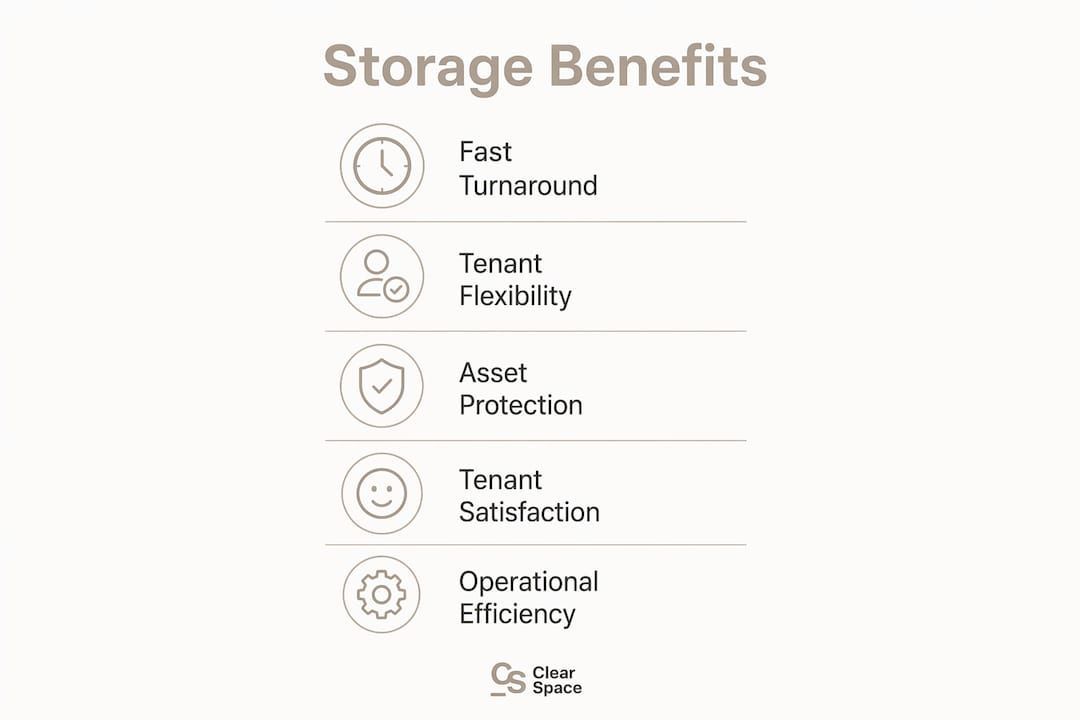
Good storage provision is one of the most practical decisions a landlord of a furnished property can make. It protects furniture assets between tenancies, reduces void periods, keeps properties clutter-free for incoming tenants, and creates a clear paper trail for HMRC. The role of storage in furnished lets goes well beyond simply finding somewhere to put a spare sofa. Done properly, it gives you flexibility over how you furnish, a defensible position under UK law when tenants leave belongings behind, and a legitimate business expense to claim against rental income.
Here is what storage actually does for a furnished let:
- Protects furniture condition during vacant periods, cutting replacement costs
- Enables flexible furnishing arrangements to suit different tenant profiles
- Supports faster property turnarounds between tenancies
- Creates space for tenants' personal belongings, improving day-to-day satisfaction
- Provides a legally compliant location for abandoned tenant items under the Torts (Interference with Goods) Act 1977
- Generates a documented link between stored assets and your rental business, supporting tax deductions
What counts as a furnished let, and what do tenants expect?
There is no legal definition of "furnished" in UK law, which means the term is largely shaped by tenant expectation and market convention. The NRLA's guidance describes a furnished property as one where tenants can move in with just their personal belongings, without needing to supply any furniture themselves.
In practice, tenants generally expect the following as a minimum:
- Bedroom: bed, mattress, wardrobe, and chest of drawers
- Living area: sofa or armchairs
- Dining area: table and chairs
- Kitchen: fridge, freezer, oven, and washing machine
- Throughout: flooring, curtains or blinds, and basic lighting
Part-furnished sits between the two extremes. You might provide a bed and white goods but leave the tenant to bring their own sofa, for instance. The key is clarity: the tenancy agreement must state explicitly what is included, who is responsible for removal costs if excess furniture is left behind, and how the furnished status is defined for that specific property.
Furnished lets tend to attract students, relocating professionals, and short-term tenants who need convenience and want to move in without the cost or hassle of buying furniture. That audience tends to generate higher turnover, which is precisely why storage planning matters so much.
How storage benefits landlords and tenants in furnished lets
Storage is most useful when you treat it as an operational tool rather than a last resort. The practical benefits stack up quickly once you start thinking about it that way.
Faster turnarounds between tenancies
Off-site storage allows landlords to "hot-swap" furniture sets between properties. When one tenant leaves and another is due in, you can move a complete set of furniture into the property from storage rather than waiting for cleaning and repairs on the outgoing set. Void periods shorten, and rental income stays consistent.
Flexibility to match tenant preferences
Not every tenant wants a fully furnished property. Storage flexibility allows you to offer the same property furnished or unfurnished depending on demand, simply by moving furniture in or out. In competitive rental markets, that adaptability is increasingly what separates a property that lets quickly from one that sits empty.
Protection of furniture assets
Furniture left in a vacant property is exposed to damp, dust, and opportunistic damage. Keeping quality items in a secure, climate-controlled unit between tenancies extends their lifespan considerably, which reduces the frequency of replacement and the associated costs.
Improved tenant satisfaction
Tenants in furnished properties often struggle with storage space for their own belongings. Providing built-in storage within the property, whether wardrobes, under-bed drawers, or hallway cupboards, directly reduces clutter and improves day-to-day comfort. That translates into longer tenancies and fewer disputes at checkout.
Pro Tip: When furnishing a new let, photograph every item against a numbered inventory list before the tenant moves in. Store a copy digitally and give one to the tenant on the day of check-in. This single step prevents the majority of deposit disputes.
Legal and financial considerations for storage in furnished lets
Tax treatment of storage costs
Storage costs incurred solely for your rental business are generally tax-deductible against rental income. HMRC requires a clear link between the stored items and the rental property they serve. If you store furniture from multiple properties in one unit, you need records showing which items belong to which let.
The Replacement of Domestic Items Relief, which applies to expenditure from 6 April 2016 onwards under HMRC's Property Income Manual ( PIM3210), allows you to deduct the cost of replacing furniture and appliances in a furnished let. It covers the replacement, not the initial purchase, of items such as beds, sofas, white goods, and furnishings. Storage costs that support the management of those assets sit alongside this relief as an allowable expense, provided the documentation is in order.
Key point: HMRC does not allow deductions for storage costs that relate to personal items mixed in with rental furniture. Keep the two entirely separate, both physically and in your accounts.
The Torts (Interference with Goods) Act 1977
When a tenant leaves belongings behind, you cannot simply dispose of them or charge storage fees without following a specific legal process. Under the Torts (Interference with Goods) Act 1977, you must give written notice to the former tenant stating where the items are being held, what costs are accruing, and the deadline for collection. Failure to follow this process can result in a claim of wrongful interference with goods.
Using a secure storage unit for abandoned items gives you a legally defensible position during the notice period. The property stays clear for the incoming tenant, and you have a documented location and cost record to support any subsequent claim.
Insurance implications
Furnished properties require both buildings insurance and landlord contents insurance to cover the furniture and appliances you provide. When furniture moves into off-site storage, check that your policy extends to cover items held away from the property. Many standard landlord contents policies do not automatically cover goods in a third-party storage facility, so a specific declaration or endorsement may be needed.
Documentation and inventory management
Clear records are the foundation of both tax compliance and legal protection. A well-maintained inventory should:
- List every item by description, condition, and location (property or storage unit)
- Include photographs dated at the start and end of each tenancy
- Record the purchase date and cost of each item to support Replacement of Domestic Items Relief claims
- Note which storage unit holds which property's furniture, with unit reference numbers
Detailed inventory records linking stored furniture to specific rental units are what HMRC expects when you claim storage as a business expense. Without them, a deduction is difficult to defend.
Practical storage options for landlords in Hertfordshire
Landlords managing furnished lets across Hertfordshire have several practical options for furniture storage, ranging from on-site solutions to professional off-site facilities.
On-site storage within the property

Built-in wardrobes, under-stair cupboards, and loft access add genuine value to a furnished let. Tenants notice the difference between a property with adequate storage and one where they are living around furniture with nowhere to put their own things. If you are refurbishing between tenancies, property maintenance planning that incorporates built-in storage tends to pay back through longer tenancies and fewer complaints.
Off-site self-storage units
For landlords managing multiple furnished properties, a dedicated self-storage unit is the most practical solution for holding spare furniture sets, seasonal items, and belongings left by outgoing tenants. Units in Hertfordshire and the surrounding area vary in size and access arrangements. When selecting a unit, look for:
- Ground-floor or lift access for moving furniture without damage
- Climate control if you are storing upholstered items or wooden furniture
- 24-hour access or extended hours to accommodate tenancy changeover dates
- Clear insurance terms covering contents in storage
Clearspaceherts offers secure local storage across Hertfordshire, with flexible arrangements suited to landlords managing furnished lets. Whether you need short-term storage during a refurbishment or a longer-term solution for spare furniture, the team can advise on the right unit size and access terms for your situation.
Professional property support between tenancies
The period between tenancies is when storage decisions have the most impact. Moving furniture out, cleaning thoroughly, carrying out any repairs, and moving a fresh set back in requires coordination. Clearspaceherts works with landlords and letting agents across St Albans, Harpenden, Hemel Hempstead, Welwyn Garden City, and Hatfield to manage exactly this process, combining storage, decluttering, and end of tenancy cleaning into one straightforward arrangement.

Pro Tip: Book your storage unit before the tenancy ends, not after. Having a confirmed location for outgoing furniture means the property can be cleared and cleaned in a single visit, cutting the gap between tenancies to a minimum.
For landlords in the area, exploring storage options before you need them is far less stressful than scrambling for space mid-void.
How Clearspaceherts can help you manage furnished lets
Clearspaceherts is a local, family-run business based in Hertfordshire, working with landlords, letting agents, and property managers to make the space between tenancies as straightforward as possible. Services include end of tenancy cleaning, property clearance, decluttering, packing support, and secure storage, often combined into a single visit to reduce disruption and cost.
If you are preparing a furnished property for a new tenant in St Albans or Hemel Hempstead, end of tenancy cleaning and furniture storage can be arranged together, so the property is ready to photograph and re-let without delay. The team understands the practical realities of furnished lets and works around tenancy changeover timelines rather than against them.
Key takeaways
Storage in furnished lets is most effective when treated as a planned operational resource rather than an afterthought, protecting furniture assets, shortening void periods, and keeping landlords legally and financially compliant.
| Point | Details |
|---|---|
| Storage protects furniture assets | Keeping items in a secure unit between tenancies extends their lifespan and reduces replacement frequency. |
| Tax deductibility requires clear records | HMRC allows storage costs as a rental business expense only when documented links to specific properties exist. |
| Legal compliance with abandoned items | The Torts (Interference with Goods) Act 1977 requires written notice before charging or disposing of tenant belongings. |
| Insurance must cover off-site storage | Standard landlord contents policies may not extend to furniture held in a third-party storage facility. |
| Flexibility increases tenant appeal | Storing furniture off-site lets landlords offer the same property furnished or unfurnished to suit different tenant needs. |