
Move support: your practical guide for 2026
Move support: your practical guide for 2026

Move support is the combination of professional labour, specialised assistance programmes, and move management services that reduces the physical and logistical burden of relocating home. Getting the right mix of moving support services makes the difference between a chaotic moving day and one that runs to plan. Whether you need help lifting heavy furniture, coordinating a complex relocation, or accessing subsidised moving assistance, the options available in 2026 are broader than most movers realise. This guide covers ten key types of relocation help, what each costs, and how to choose what fits your situation.
1. What is move support and why does it matter?
Move support covers every form of paid or subsidised help that takes tasks off your plate during a residential move. The term is informal. The industry uses "moving labour," "move management," and "relocation assistance" to describe specific services within this broader category. Knowing the correct terms helps you search more effectively and compare quotes accurately.
The physical and logistical load of moving home is consistently underestimated. Professional moving labour saves customers an average of 3 hours on moving day by speeding up loading and unloading. Three hours is the difference between finishing before dark and running into the evening with a van still half full.

2. Professional moving labour: the foundation of any move
Professional moving labour means hiring trained helpers for the physical tasks: loading, unloading, carrying heavy furniture, and manoeuvring items through tight spaces. You hire the van; they provide the muscle.
The benefits are straightforward:
- Time saving. Local moving labour cuts an average of 3 hours from moving day by working faster and more safely than untrained helpers.
- Injury prevention. Back injuries are the most common moving day accident. Trained labour uses proper lifting technique and equipment.
- Flexibility. You can hire help for a few hours or a full day, depending on the size of your move.
- Cost control. Paying for labour by the hour is often cheaper than booking a full-service removal company.
Pricing varies by region and team size, but most local labour services charge by the hour per helper. Upfront quotes are standard. Reputable platforms guarantee payment only after satisfaction, which reduces the risk of paying for poor work.
Pro Tip: Hire moving labour specifically for heavy or awkward items such as sofas, wardrobes, and white goods. Pack everything else yourself. This approach cuts your labour bill significantly while removing the tasks most likely to cause injury.
3. Specialised moving assistance for seniors and low-income movers
Not everyone can afford full-price moving labour. Subsidised and charity-funded moving assistance programmes exist specifically for older adults, disabled people, and low-income households. Access depends on eligibility, but the support on offer is substantial.
Programmes like H.O.M.E. in Chicago show what is possible at scale:
- Eligibility screening. Applicants must meet age or disability thresholds. H.O.M.E. requires age 62 or older, or 55 or older with a qualifying disability.
- Income assessment. Fees operate on a sliding scale. Service fees start as low as $25, making professional moving assistance accessible to those on fixed incomes.
- Vetted mover network. The programme connects applicants with pre-screened, insured movers rather than leaving them to search independently.
- On-site coordination. A programme representative attends on moving day to oversee the process and resolve any issues.
- Packing materials. Some programmes supply boxes and wrapping materials as part of the package.
The limitations are real. Relocation assistance programmes typically exclude packing materials costs and personal expenses, covering only professional labour and transport. Many applicants fail because they lack critical documentation such as medical letters or proof of disability. Prepare your paperwork before applying, not after.
4. How professional move management simplifies complex relocations
Move management is a distinct service from standard moving labour. A move manager coordinates the entire relocation process: planning, decluttering, packing oversight, vendor scheduling, and home setup at the destination. The industry body NASMM (National Association of Senior Move Managers) awards an A+ Accreditation to firms that meet high standards of practice. That accreditation is a reliable quality signal when choosing a provider.
Move management includes floor planning, decluttering, packing, and full home setup, which separates it clearly from a standard removal company. A removal company moves your boxes. A move manager decides what goes in them, where they go, and how the new home is arranged before you arrive.
Key services typically included:
- In-person walkthrough. An in-person assessment is the critical first step. Online quotes alone cannot capture the complexity of a full household move.
- Decluttering and sorting. Move managers help you decide what to keep, donate, or dispose of before packing begins. This reduces volume and therefore cost.
- Vendor coordination. They book and manage removal companies, storage providers, and cleaning services on your behalf.
- Home setup. Furniture is placed, beds are made, and kitchens are unpacked before the move manager leaves.
Hourly rates for professional move management typically start at £120–£150 with minimum engagement hours. That cost reflects a genuinely different level of service. For busy professionals, older adults downsizing, or anyone managing a complex estate move, the time and stress saved justifies the rate.
Pro Tip: Ask any move management firm for an in-person walkthrough before accepting a quote. A manager who quotes remotely without seeing your property cannot accurately scope the work, and you will likely face unexpected charges on the day.
5. Relocation assistance programmes for displaced and emergency movers
Some movers face relocation not by choice but by necessity: eviction, natural disaster, domestic circumstances, or housing displacement. Government and charity-funded relocation assistance programmes exist for these situations, though access is restricted.
Relocation assistance typically serves low-income or displaced families and requires verified proof of hardship. The support covers financial help with transport and labour costs, and in some cases emotional support and signposting to housing services. What it rarely covers is packing materials, storage fees, or personal expenses.
The practical implication is clear. If you qualify, these programmes provide real financial relief. If you are close to the income threshold, gather every piece of supporting documentation before applying. A missing medical letter or unsigned tenancy agreement is the most common reason applications fail.
6. Specialised help for unusual or delicate items
Standard moving labour handles boxes and furniture. Some items need a different approach entirely. Pianos, antiques, large artworks, wine collections, and medical equipment all require specialist handling, specialist packaging, and sometimes specialist insurance.
Specialist movers charge a premium, but the alternative is damage to items that cannot be replaced or repaired cheaply. For a grand piano, for example, the cost of specialist removal is a fraction of the cost of repairs to a damaged soundboard.
Decluttering before your move reduces the number of specialist items you need to move in the first place. Fewer items means lower costs across every category of moving support. It is the single most effective way to reduce your total moving bill before you book a single service.
7. Technology tools that coordinate your move
Apps and digital tools do not carry boxes, but they reduce the coordination burden significantly. Moving checklists, task management apps, and shared planning tools keep everyone involved in the move working from the same information.
A shared digital checklist prevents the most common moving day failures: forgotten utility transfers, missed key handover times, and boxes that arrive at the wrong address. Tools like Google Tasks, Trello, or a dedicated moving app give you a single place to track every outstanding action.
Pro Tip: Create a shared moving folder in Google Drive or a similar tool. Store all quotes, booking confirmations, and contact numbers in one place. Anyone helping on the day can access it from their phone without needing to call you.
8. Combining partial labour with self-managed packing
The most cost-effective approach for most movers is not full-service management and not pure DIY. It is a deliberate combination of the two. Defining which tasks to outsource and which to manage personally reduces stress and keeps the budget under control.
A practical split looks like this: you pack all personal items, clothing, books, and kitchen goods yourself. You hire moving labour for the heavy furniture, white goods, and anything requiring two people to carry safely. You handle the van booking and key logistics. This approach gives you control over your belongings while removing the tasks most likely to cause injury or delay.
The pre-move checklist is the tool that makes this split work. Without a clear list of what needs doing and who is doing it, tasks fall through the gaps.
9. Government and local authority moving assistance in the UK
Local councils in England and Wales sometimes provide or signpost moving assistance for vulnerable residents, particularly older adults or those leaving unsuitable housing. Provision varies significantly by area. Some councils fund removal costs directly; others refer residents to local charities or housing associations.
The starting point is always your local council's housing team. Explain your circumstances clearly and ask specifically about removal assistance or relocation grants. Waiting lists exist, so apply as early as possible. Hertfordshire residents can contact their district council housing team for current provision.
10. How to choose the right moving assistance for your needs
Choosing the right combination of moving support comes down to four factors: the size of your move, your physical ability, your time constraints, and your budget.
Ask yourself these questions before booking anything:
- How much can you physically do? If you have a back condition or limited mobility, professional labour is not optional. It is necessary.
- How complex is the move? A one-bedroom flat move is manageable with a few hours of hired labour. A five-bedroom family home with a loft full of accumulated possessions needs move management.
- What is your time budget? Full-service move management costs more but returns hours to your week. Calculate the value of your time honestly.
- Are you eligible for subsidised support? If you are over 62, have a qualifying disability, or are on a low income, check eligibility for assistance programmes before paying full price.
Always get written quotes. Always confirm what is and is not included. And consider whether using one company for multiple services reduces coordination effort and total cost.
Key takeaways
Effective move support combines professional labour, move management, and targeted assistance programmes to reduce both the physical and logistical burden of relocating.
| Point | Details |
|---|---|
| Start with labour for heavy items | Hiring help for loading and unloading saves an average of 3 hours on moving day. |
| Check eligibility for subsidised programmes | Seniors and low-income movers may access vetted moving help for as little as a $25 fee. |
| Move management goes beyond transport | NASMM-accredited move managers handle decluttering, packing, vendor coordination, and home setup. |
| Always request an in-person walkthrough | Remote quotes cannot accurately scope complex moves and often lead to unexpected costs. |
| Combine services to control costs | Pairing self-managed packing with hired labour for heavy items is the most cost-effective approach for most movers. |
What I have learnt from watching people move
Most people underestimate the move until they are standing in a half-empty house at 9pm with a van still to unload. I have seen it repeatedly. The movers who cope best are not the ones who hired the most help. They are the ones who decided early what they would handle themselves and what they would hand off.
The conventional advice is to book a full-service removal company and let them handle everything. That works for some people. But for many movers, it creates a different kind of stress: strangers handling personal belongings, no control over how things are packed, and a bill that grows with every extra box.
What actually works is a clear division of labour decided before moving day, not during it. Pack your own personal items. Hire professional help for the heavy and awkward pieces. If the move is genuinely complex, bring in a move manager for the coordination layer. That combination gives you control where it matters and relief where it counts.
The other thing I would say: moving without a traditional removal company for packing is more viable than most people assume. Packing your own belongings takes time, but it also means you know exactly where everything is when you arrive. That knowledge is worth more than it sounds at 10pm on moving day.
Plan early. Decide your split. And do not leave the heavy lifting to chance.
— Ashlea
Moving in Hertfordshire? Clearspaceherts can help
Clearspaceherts provides practical moving home help across Hertfordshire, covering St Albans, Harpenden, Hemel Hempstead, Welwyn Garden City, Hatfield, and surrounding areas. Whether you need packing support, decluttering before the move, or help organising your new home after arrival, the team handles the tasks that slow most moves down.
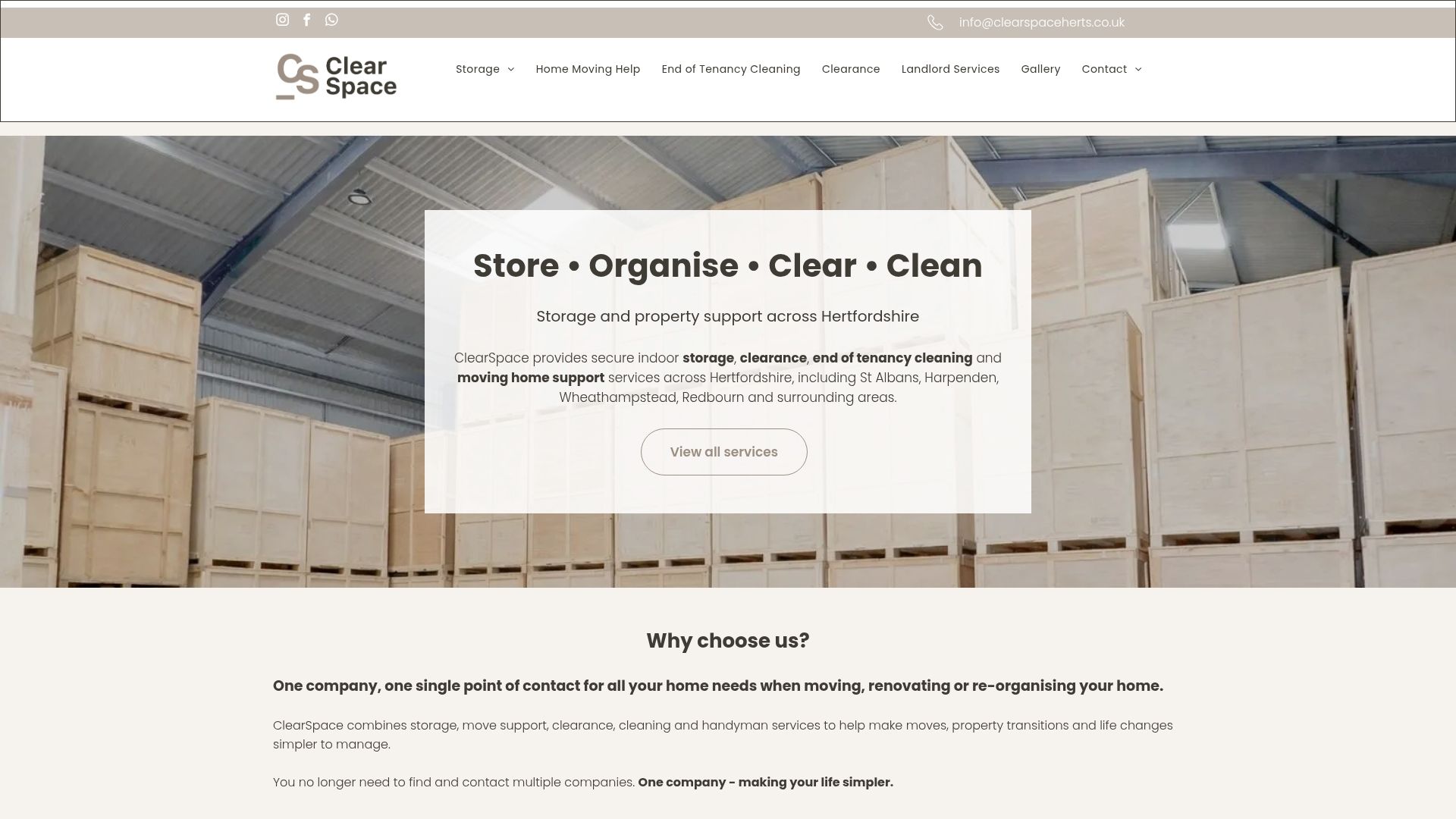
As a local, family-run business, Clearspaceherts combines multiple services into one straightforward arrangement. That means one point of contact, one consistent team, and no need to coordinate between separate providers. For landlords and tenants, end of tenancy cleaning is also available as part of the same service. Get in touch to discuss what your move needs and receive a clear, upfront quote.
FAQ
What does move support include?
Move support covers professional moving labour, move management services, and subsidised relocation assistance programmes. The right combination depends on the size of your move, your budget, and your physical ability.
How much does professional moving labour cost?
Local moving labour is typically priced by the hour per helper, with upfront quotes standard practice. Move management services start at higher hourly rates, reflecting the broader scope of coordination and planning involved.
Who qualifies for subsidised moving assistance?
Subsidised moving programmes typically require applicants to be aged 62 or older, or 55 or older with a qualifying disability, and to meet income thresholds. Proof of hardship documentation, such as medical letters, is usually required.
Is move management worth the cost?
Move management is worth the cost for complex moves, older adults downsizing, or anyone with limited time. NASMM-accredited move managers handle everything from decluttering to home setup, removing the coordination burden entirely.
How do I reduce my moving costs without doing everything myself?
Pack personal items yourself and hire professional labour only for heavy furniture and awkward pieces. This combination saves time on moving day while keeping costs lower than a full-service booking.