
Storage solutions for homeowners: a practical 2026 guide
Storage solutions for homeowners: a practical 2026 guide
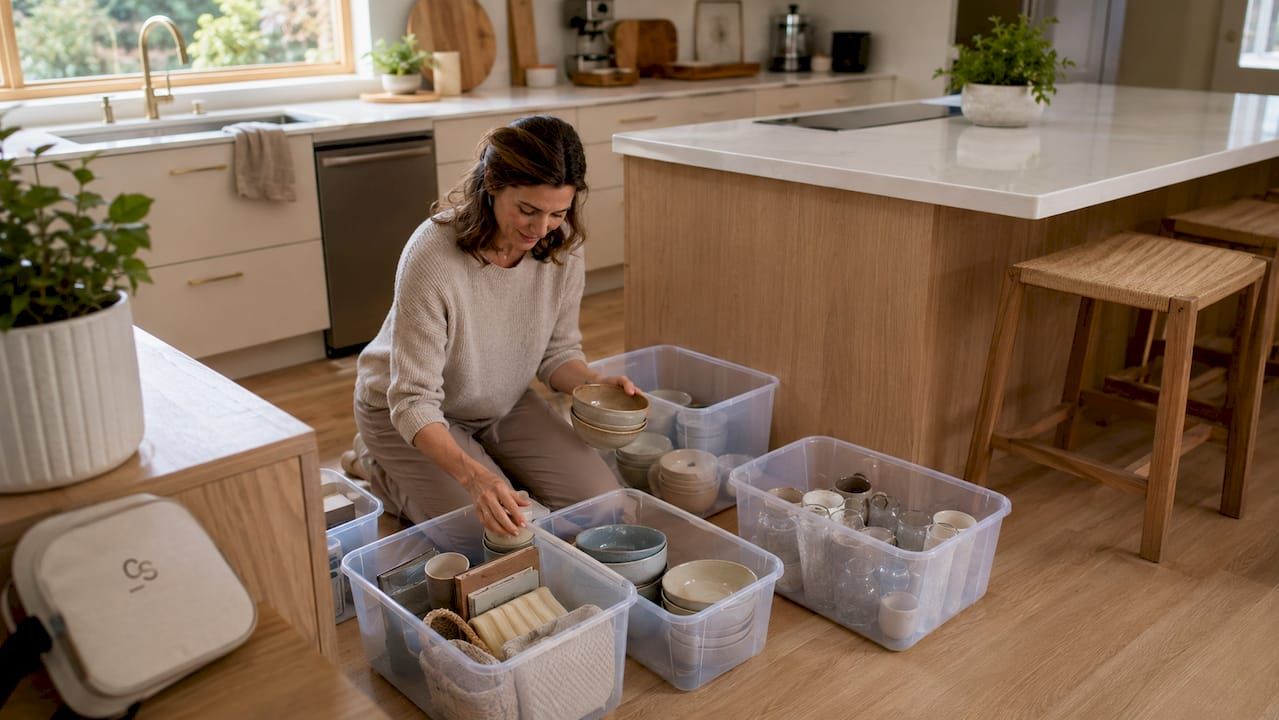
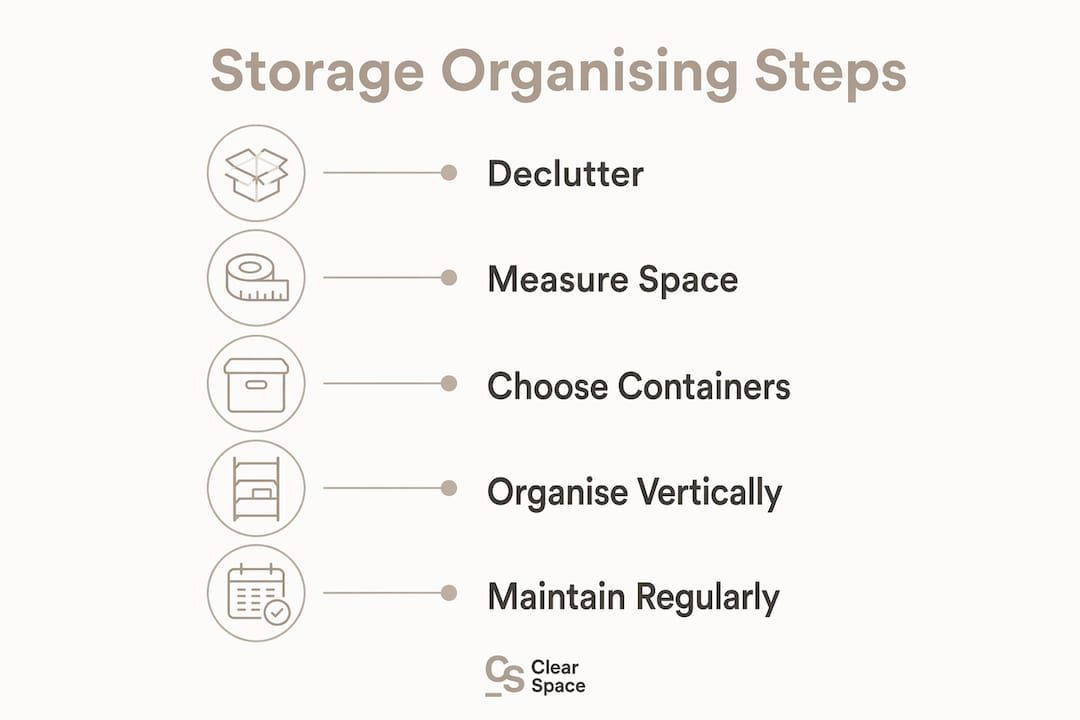
Storage is the process of systematically organising and safely keeping household items to maximise usable space and reduce clutter. Most homeowners and renters approach it the wrong way. They buy containers first, fill them with things they no longer need, and wonder why their home still feels chaotic. The correct sequence is always declutter first, then measure, then choose your containers. Clearspaceherts works with homeowners across Hertfordshire every week and sees this mistake more than any other. Get the order right and every other decision becomes straightforward.
What are the best strategies to declutter before choosing storage solutions?
Decluttering is not a preliminary step. It is the foundation of any effective home organisation plan. Buying containers before decluttering leads to more clutter, because empty bins take up valuable space before you have decided what actually needs keeping. That single insight changes everything about how you approach a disorganised room.
Start by sorting every category of item into three groups: keep, donate, and dispose. Work one room at a time rather than pulling everything out of the whole house at once. That approach creates a manageable process instead of a paralysing mess.
Professional organisers recommend specific inventory limits to prevent overflow. Household linen limits are a useful benchmark: three towels and washcloths per person, two sets of sheets per bed, and one extra set for guests. Applying a number like that removes the guesswork and stops the linen cupboard from becoming a dumping ground.
- Sort by category, not by room. Clothes from every room go together, then books, then kitchen items.
- Set a firm discard rule. If you have not used it in 12 months and it has no sentimental value, it goes.
- Donate before you dispose. Local charity shops, food banks, and community groups in Hertfordshire accept a wide range of household goods.
- Do not clean items before donating. That habit delays the process and rarely makes a difference to the recipient.
Pro Tip: Before you touch a single container, read the guide on decluttering before a move. The principles apply equally to a full home sort, not just a house move.
How do you choose and organise containers to maximise home space?
Effective storage starts after decluttering and after measuring the space precisely. Empty containers without a plan increase clutter rather than reduce it. Measure the shelf, drawer, or cupboard before you buy anything. A bin that is two centimetres too wide wastes the entire shelf.
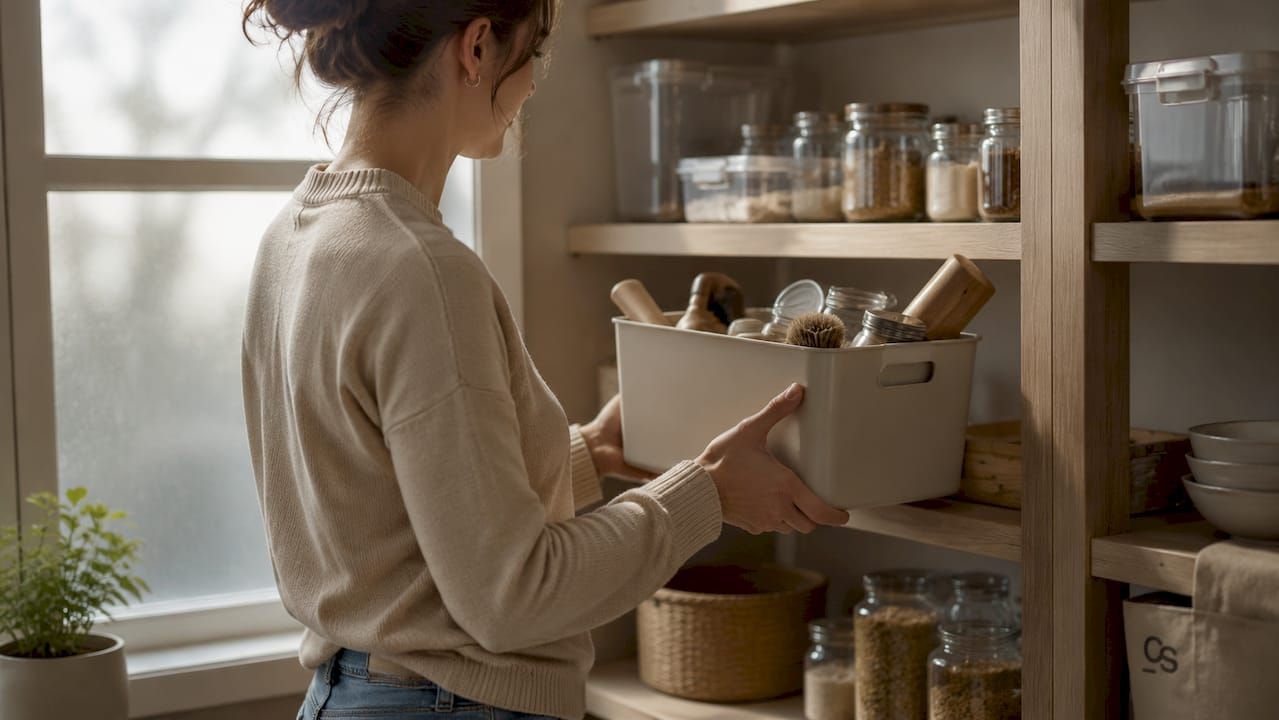
Clear bins are the single most useful container type for most homes. You can see the contents without opening them, which means you actually use what you store. Opaque bins work well for items you want visually calm, such as a monochromatic linen shelf, but they require labels on every face.
Vertical space and multi-functional tools like lazy Susans and adjustable dividers solve the most common access problem in deep cupboards: things get pushed to the back and forgotten. A turntable in a corner cabinet or under the sink brings everything to the front with one spin.
| Container type | Best use | Key benefit |
|---|---|---|
| Clear stackable bins | Shelves, pantry, garage | Instant visibility without opening |
| Drawer dividers | Clothing, utensils, office supplies | Vertical folding keeps categories visible |
| Labelled baskets | Open shelving, bathrooms | Combines aesthetics with function |
| Turntables (lazy Susans) | Deep cupboards, under-sink areas | Eliminates items lost at the back |
| Vertical door organisers | Pantry doors, bathroom doors | Uses otherwise wasted door space |
Pro Tip: Buy containers in one colour family for open shelving. Visual consistency makes a space feel organised even when it is not perfectly sorted. White, natural rattan, or clear acrylic all work well.
For fitted wardrobe solutions that go beyond off-the-shelf bins, the guide on choosing a fitted wardrobe covers how to match internal fittings to your actual wardrobe contents.
When should you use a storage unit rental for home organisation?
Off-site storage, also called self-storage, is the rental of a secure unit outside your home to hold items temporarily. It is not a solution for clutter. It is a practical tool for specific life transitions: moving house, renovating, downsizing, or managing a property between tenancies.
Self-storage units typically lease on a flexible month-to-month basis, which suits short-term needs well. Unit costs vary depending on location and size. That flexibility is genuinely useful during a house move or renovation, where your timeline can shift by weeks.
Storage costs accumulate over time, so treating a unit as a long-term solution for items you cannot decide about is an expensive habit. If something has been in a unit for more than six months and you have not needed it, the honest answer is usually that you do not need it at all.
Renters must provide a valid government-issued photo ID and typically access units via personalised codes during set gate hours. Most facilities operate access windows such as 6:00 AM to 10:00 PM. Check the specific hours before you commit, particularly if you need early morning or late evening access during a move.
Inspect any storage unit physically before signing a contract. Unit dimensions listed online are approximate. A unit described as 50 square feet may have a pillar, a sloped ceiling, or an awkward door position that reduces usable space significantly.
Pro Tip: If you are storing during a renovation, read the Clearspaceherts guide on storage during home renovation before booking a unit. It covers what to prioritise and how to avoid paying for more space than you need.
For homeowners arranging storage between house moves, the guide on storage between house moves gives a practical step-by-step approach.
What are smart storage ideas for every room in your home?
Good home storage solutions work with the architecture of each room rather than against it. The bedroom, kitchen, bathroom, garage, and living room each have distinct challenges and distinct fixes.
Bedroom
Under-bed space is the most underused area in most bedrooms. Flat plastic containers with lids are ideal for seasonal clothing, spare bedding, or shoes. Pair them with a bed frame that has built-in drawers if you are replacing furniture. For clothes storage ideas that go beyond basic folding, vertical drawer dividers and hanging shelf organisers double the capacity of a standard wardrobe without any structural changes.
Kitchen
The kitchen benefits most from vertical thinking. Stack pots with lids stored separately in a vertical lid rack. Use a turntable on pantry shelves so tins and jars at the back are always reachable. Drawer dividers keep utensils sorted and prevent the single-drawer chaos that most kitchens develop within months of moving in.
Bathroom
Bathrooms are small and often lack built-in storage. Over-the-door organisers on the back of the bathroom door hold toiletries, cleaning products, and hair tools without taking up any floor or shelf space. Labelled baskets on open shelving keep the visual feel tidy while making categories easy to find.
Garage and outdoor areas
The garage is where organisation systems go to die if there is no plan. Wall-mounted pegboards and shelving units keep tools off the floor and visible. For outdoor storage options, weatherproof deck boxes hold garden cushions, tools, and children's toys without taking up indoor space. Label everything, including the shelves themselves, so the system survives the whole household using it.
Living room
Bulky instruction manuals, cables, and seasonal décor are the main culprits in living room clutter. A labelled box for manuals, a cable tidy box for electronics, and a dedicated basket for seasonal items each solve a specific problem. Multi-purpose furniture such as ottomans with internal storage removes the need for additional units in smaller rooms.
Key takeaways
Effective storage depends on decluttering first, measuring accurately, and choosing containers that match the specific space and contents.
| Point | Details |
|---|---|
| Declutter before buying containers | Empty bins bought too early become clutter themselves; sort first, then shop. |
| Apply inventory limits | Use benchmarks like three towels per person to prevent linen and clothing overflow. |
| Measure before you buy | Container dimensions must match the shelf or drawer precisely or the system fails. |
| Use vertical space | Drawer dividers, turntables, and door organisers unlock space that flat stacking wastes. |
| Treat off-site units as short-term | Storage unit rental suits life transitions; long-term use accumulates cost without solving clutter. |
What I have learned from years of helping people organise their homes
The single most common mistake I see is the container purchase made in optimism. Someone walks into a home goods shop, buys a set of matching bins, brings them home, and fills them with things they should have thrown away two years ago. The room looks tidier for about a week. Then the bins overflow and the problem is worse than before because now there are also bins to deal with.
The homes that stay organised share one habit: the owners reassess regularly. Not a full declutter every month, but a quick check every season. Does this shelf still make sense? Have we accumulated duplicates again? That ongoing reassessment is what separates a home that works from one that gradually fills back up.
The emotional side of this is real. A cluttered space creates a low-level background stress that most people do not notice until it is gone. When a room is genuinely organised, the feeling is not just visual satisfaction. It is the absence of a friction you had stopped noticing. That is worth the effort of getting the process right the first time.
My honest advice: do not buy a single container until you have finished the declutter. It feels counterintuitive because the containers feel like progress. They are not. The declutter is the progress.
— Ashlea
Clearspaceherts storage and home organisation services in Hertfordshire
Clearspaceherts provides secure local storage and practical home organisation support across Hertfordshire, covering St Albans, Harpenden, Hemel Hempstead, Welwyn Garden City, Hatfield, and surrounding areas. Whether you are preparing to move, renovating, or simply need to reclaim space at home, the team handles the practical side so you do not have to manage it alone.
Services include decluttering support, packing assistance, property clearance, and moving home help, all available as standalone or combined. If you are also preparing a rental property between tenancies, end of tenancy cleaning in Hertfordshire is available alongside storage and clearance work. Contact Clearspaceherts directly to discuss your situation and get a straightforward quote.
FAQ
What is the correct order for organising home storage?
Declutter first, then measure your space, then buy containers. Purchasing bins before decluttering creates additional clutter rather than solving it.
How many towels and sheets should I keep per person?
Professional organisers recommend three towels and washcloths per person, two sets of sheets per bed, and one extra set for guests.
What should I use a storage unit rental for?
Self-storage units suit short-term life transitions such as moving house or renovating. They are not cost-effective as a long-term solution for items you cannot decide about.
How do I make the most of small rooms with limited storage?
Use vertical space with door organisers, drawer dividers, and turntables. Multi-functional furniture such as ottomans with internal compartments removes the need for extra units in tight spaces.
Do I need to inspect a storage unit before renting?
Yes. Unit dimensions listed online are approximate. Always inspect a unit in person before signing a contract to confirm the actual usable space matches your needs.