
Property clearance: a practical guide for homeowners
Property clearance: a practical guide for homeowners

Property clearance is the organised removal and disposal of unwanted items from a home, and it is one of the most practical steps you can take before moving, letting, or selling a property. Unlike a simple tidy-up, professional clearance involves sorting belongings into categories, managing legal waste disposal, and coordinating recycling or donation. Clearspaceherts provides this service across Hertfordshire, covering St Albans, Harpenden, Hemel Hempstead, and surrounding areas. Getting the process right saves time, reduces costs, and keeps you on the right side of UK waste regulations.
What does property clearance actually involve?
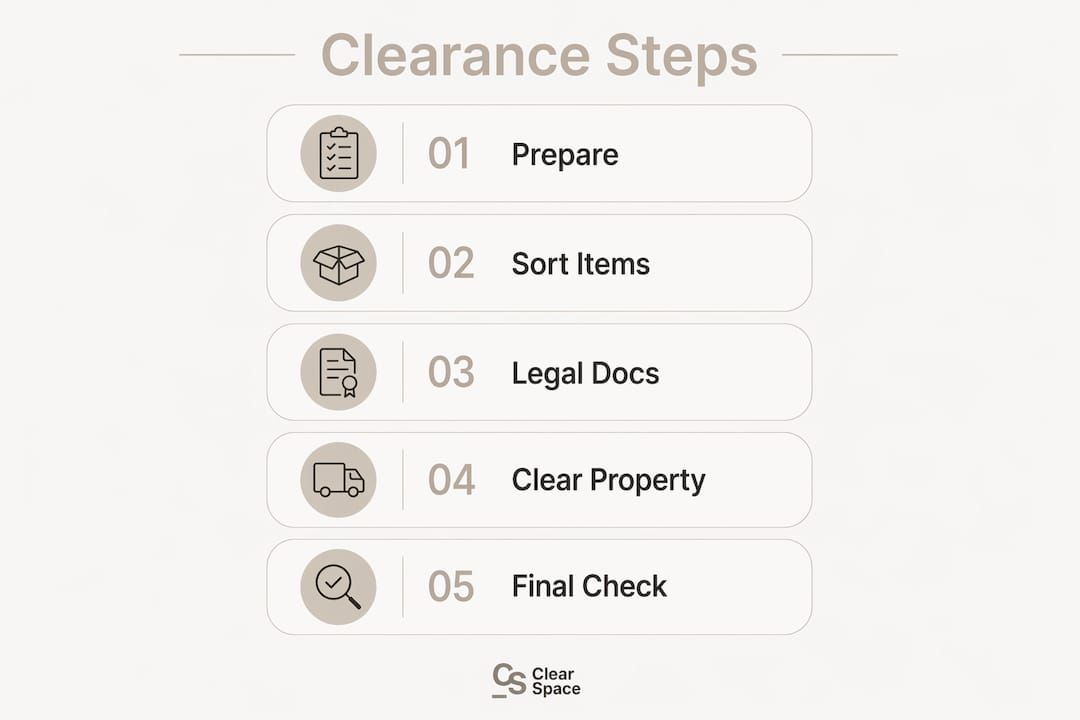
Property clearance is a comprehensive service that goes well beyond loading a skip. Professional clearance covers legal documentation, sensitive handling of personal items, and coordination for recycling and charity donation. That scope is what separates it from basic junk removal, and it matters when you are dealing with an entire household rather than a few bags of rubbish.
The process typically moves through every room, starting with large furniture and working down to smaller items. Teams separate belongings into reuse, recycling, and disposal streams as they go. This waste hierarchy approach keeps landfill contributions low and satisfies the Environment Agency's requirements for responsible disposal.

Legal documentation is a non-negotiable part of the process. Waste Transfer Notes record what was removed, where it went, and who was responsible. These notes protect you as the property owner or tenant from any fly-tipping liability if waste is later found dumped illegally.
A final walkthrough is the last step on clearance day. It confirms that no items were missed and that the property meets the agreed standard of cleanliness before the team leaves.
How to prepare your home before clearance day
Preparation is the single biggest factor in controlling your clearance costs. Sorting items into Keep, Donate, Sell, and Dispose categories before the team arrives reduces the volume they need to handle. Pricing is based on volume and complexity, so less for the team to remove means a lower final bill.
Start at least a week before clearance day. Work through one room at a time and use clearly labelled boxes or bags for each category. This method also forces you to make decisions early, which prevents last-minute confusion on the day itself.
Remove all personal documents, cash, and jewellery before the team arrives. Valuable items such as cash or jewellery are frequently found hidden among belongings during clearance. Sorting beforehand protects heirlooms and prevents accidental disposal of things that matter.
Defrost fridges and freezers at least 24 hours in advance. Label any items that must stay in the property, such as fixtures the new tenant or buyer expects to find. This avoids any confusion on the day and keeps the job moving at pace.
Notify your neighbours at least 48 hours before clearance day, particularly if large vehicles will be parked outside. Blocked driveways and parking disputes slow the job down and create unnecessary friction with people you live alongside.
Pro Tip: Photograph any items of potential value before the team arrives. A quick photo record means you have evidence if anything is later disputed, and it helps when listing items for sale online.
What to expect on clearance day
An average furnished house clearance for a 2–3 bedroom property takes 4–8 hours of on-site work. That figure gives you a realistic window for planning your own day, whether you need to be present or have somewhere else to be.
The team works room by room, removing large furniture first to create space. Smaller items follow, with each load sorted into the correct stream before it leaves the property. Nothing goes into a single pile to be sorted later. This organised approach keeps the process transparent and the documentation accurate.
You will receive Waste Transfer Notes at the end of the job. Keep these documents safe. For estate or probate clearances, they serve as legal proof of lawful disposal and are often required by solicitors handling the estate.
- Items are sorted into reuse, recycling, and disposal streams throughout the job.
- Waste Transfer Notes are issued for every load removed.
- The team conducts a final walkthrough with you before leaving.
- Any items flagged to stay are left in place and confirmed during the walkthrough.
- The property is left in a clean, cleared state ready for inspection, cleaning, or handover.
The final walkthrough is worth taking seriously. Walk every room yourself and check cupboards, lofts, and outbuildings. It is far easier to raise a concern before the team leaves than to arrange a return visit.
How much does clearance cost, and how can you reduce it?
Clearance pricing is based on three main factors: volume of items, labour time, and the presence of heavy or awkward pieces. Heavy or bulky items such as pianos, safes, or large American-style fridges require special handling or dismantling. These add to the cost, and failing to mention them upfront often leads to revised quotes on the day.
The most effective way to reduce your bill is to sort before the team arrives. Every bag or box you donate to a charity shop or sell through an online marketplace is one less item charged in the clearance volume. Clearspaceherts, for example, works with clients beforehand to give accurate quotes based on realistic volume estimates.
Estate and bereavement clearances carry an additional layer of complexity. Emotional weight in these situations requires early planning and clear communication to handle sentimental items respectfully. Rushing the process or leaving decisions too late increases both stress and cost. For sensitive clearances, a bereavement support service that understands the emotional dimension is worth seeking out.
Pro Tip: Get at least two written quotes and ask each provider to break down their pricing by volume, labour, and any specialist item handling. This makes it easy to compare like for like rather than guessing why one quote is higher than another.
| Cost factor | What it means for your quote |
|---|---|
| Volume of items | More to remove means higher labour and disposal costs. |
| Heavy or specialist items | Pianos, safes, and large appliances add handling time and cost. |
| Pre-sorting by you | Reducing volume before the team arrives lowers the final bill. |
| Donation and resale | Items given to charity or sold are not charged in the clearance volume. |
| Estate or probate complexity | Additional documentation and sensitivity may affect pricing and timeline. |
How to choose a reputable clearance company
The most important check is licensing. Any company removing waste from your property must hold a valid Waste Carrier Licence issued by the Environment Agency. If they cannot show you this licence, you carry the legal risk if the waste is fly-tipped. This is not a minor administrative point. Fly-tipping fines in England can reach thousands of pounds, and the liability can fall on the property owner.
Beyond licensing, look for the following when choosing a provider:
- Clear written quotes with a breakdown of costs before any work begins.
- Evidence of environmental responsibility , including recycling rates and charity donation partnerships.
- Experience with sensitive clearances , particularly estate or bereavement situations where communication and patience matter.
- Transparency about documentation , including Waste Transfer Notes issued as standard.
- Additional services such as end of tenancy cleaning or storage, which can reduce the number of companies you need to coordinate.
Customer reviews are a reliable signal. Look for consistent mentions of punctuality, respectful handling of belongings, and clear communication. A company that handles the emotional side of clearance well will almost always handle the practical side well too.
Preparing a property for sale also involves more than clearing it. Odour-free presentation is a detail many homeowners overlook until viewings begin. Combining clearance with a thorough clean addresses both issues in one visit.
What to do after clearance is complete
The first step after the team leaves is a thorough inspection of every room, including loft spaces, garages, and outbuildings. Check that nothing has been left behind and that the property matches the agreed handover standard. If you spot anything, contact the company the same day while the job is still fresh.
Collect and file all paperwork before you do anything else. This includes:
- Waste Transfer Notes for every load removed.
- Receipts or invoices for the full clearance job.
- Any donation receipts from charity collections.
- Written confirmation of items left in place by agreement.
- A signed completion note if the company provides one.
For estate or probate clearances, keep all invoices and Waste Transfer Notes as legal proof of lawful disposal. Solicitors handling the estate will often request this documentation, and missing paperwork can delay the probate process.
Once the property is clear, consider whether it needs professional cleaning before the next occupant moves in. A cleared property is not the same as a clean one. End of tenancy cleaning covers areas that clearance teams do not address, such as oven interiors, bathroom grout, and carpets. Booking both services together, or with the same provider, reduces coordination time and keeps the handover on schedule.
If any items of value remain after clearance, arrange storage or sale promptly. Storage options in Hertfordshire are worth considering for items you want to keep but cannot accommodate immediately in your next home.
Key takeaways
Property clearance done well requires preparation, the right documentation, and a licensed provider who handles waste responsibly and people respectfully.
| Point | Details |
|---|---|
| Sort before clearance day | Dividing items into Keep, Donate, Sell, and Dispose reduces volume and lowers your bill. |
| Demand legal documentation | Waste Transfer Notes protect you from fly-tipping liability and are required for probate. |
| Disclose heavy items upfront | Pianos, safes, and large appliances affect pricing and must be flagged before the quote is finalised. |
| Conduct a final walkthrough | Check every room, cupboard, and outbuilding before the team leaves the property. |
| Combine clearance with cleaning | A cleared property still needs professional cleaning before it is ready for new occupants. |
What I have learned from watching clearances go wrong
Working in property support across Hertfordshire, the pattern I see most often is homeowners leaving the sorting too late. They book a clearance team, assume the professionals will handle every decision, and then spend the morning of the job pulling items out of boxes because they realise they are not ready to let go. That delay costs money and adds stress that was entirely avoidable.
The second most common mistake is not disclosing what is in the property. A team that arrives expecting a standard two-bedroom clearance and finds a garage full of tools, a piano in the dining room, and a shed packed with garden equipment will need to revise the quote on the spot. That conversation is uncomfortable for everyone. A ten-minute phone call beforehand prevents it entirely.
What I find genuinely encouraging is how much lighter people feel once a clearance is done. There is a real shift that happens when a property is empty and ready for its next chapter. The process feels daunting beforehand, but the result is almost always a relief. If you are dealing with a bereavement clearance, give yourself permission to take it slowly. The pre-move checklist approach works just as well for emotional decisions as it does for practical ones.
Choose a company that treats the process with the same care you would. Good clearance teams do not just remove items. They ask questions, they handle things carefully, and they leave you with paperwork that actually means something.
— Ashlea
Clearspaceherts clearance and cleaning services in Hertfordshire
Clearspaceherts provides house clearance in Hertfordshire for homeowners, tenants, landlords, and letting agents. The team handles full property clearances with legal waste disposal, Waste Transfer Notes as standard, and respectful handling of personal and sentimental items.
After clearance, Clearspaceherts also offers end of tenancy cleaning in Hertfordshire to bring properties up to move-in standard. Combining both services through one local provider keeps the process straightforward and the handover on schedule. Contact Clearspaceherts to request a quote or discuss your clearance requirements.
FAQ
What is included in a professional property clearance?
Professional property clearance covers the removal of furniture, appliances, and general household items, along with legal waste disposal and Waste Transfer Notes. It differs from basic junk removal in its scope, documentation, and handling of sensitive personal belongings.
How long does a house clearance take?
An average 2–3 bedroom furnished property takes 4–8 hours of on-site work to clear. The full process from initial quote to completed handover typically takes around one week.
Do I need to be present during the clearance?
You do not need to be present throughout, but attending the final walkthrough is strongly recommended. This confirms that no items were missed and that the property meets the agreed standard before the team leaves.
How can I reduce the cost of my clearance?
Sort items into Keep, Donate, Sell, and Dispose categories before the team arrives. Reducing the volume of items to be removed is the most direct way to lower the final cost, as pricing is based primarily on volume and labour.
What paperwork should I keep after a clearance?
Keep all Waste Transfer Notes, invoices, and donation receipts. For estate or probate clearances, this documentation serves as legal proof of lawful disposal and is often required by solicitors handling the estate.