
How to arrange storage between house moves
How to arrange storage between house moves

Arranging storage between house moves means selecting and preparing a temporary storage solution that protects your belongings and keeps your move on track during the gap between leaving one property and settling into another. Whether you face a delayed completion, a short-term rental period, or a renovation before moving in, the right storage option transforms a potentially chaotic transition into a manageable process. This article covers the main storage options for moving, how to prepare and load your belongings, and how to choose a facility that suits your timeline and budget.
What are the main temporary storage options when moving house?
Three primary solutions exist when you need to arrange storage between house moves: Storage-in-Transit (SIT), self-storage units, and portable storage containers. Each suits a different set of circumstances, and understanding the differences saves both money and stress.
Storage-in-Transit (SIT) is a carrier-managed service where your removal company collects, stores, and redelivers your belongings under one contract. SIT is ideal for gaps of 7 to 90 days, typically costing between £120 and £400 per month depending on volume. This means you hand over responsibility to one provider and avoid organising a separate storage booking alongside your move.
Self-storage units give you a private, lockable space you rent directly from a facility. Unit costs vary from £40 to £320 per month depending on size and whether climate control is included. The trade-off is that self-storage requires two separate moves: one to the unit and one to your new home, which adds both cost and handling risk.

Portable storage containers are delivered to your door, loaded at your own pace, and collected by the provider. Containers suit transitions under three months, with costs typically between £80 and £360 per month. They remove the need to drive a large vehicle or visit a facility, making them particularly useful when you have an irregular schedule during the move.
| Option | Typical monthly cost | Access | Best for |
|---|---|---|---|
| Storage-in-Transit (SIT) | £120 to £400 | Limited, via carrier | Short gaps, all-in-one convenience |
| Self-storage unit | £40 to £320 | Private, frequent | Regular access, flexible duration |
| Portable container | £80 to £360 | On-site until collected | Loading at your own pace, no facility visits |
The main factor in choosing between these options is how often you need to retrieve items. Self-storage offers private, frequent access, which is the biggest practical advantage over carrier-managed or container solutions. If you know you will need to collect specific items before your new home is ready, a self-storage unit gives you that control.
Pro Tip: Before booking any storage, check our guide on things to put into storage first when moving house. Knowing what goes into storage before you start packing saves significant time on moving day.
How to prepare your belongings for short-term storage
Good preparation is the difference between a storage unit you can navigate confidently and one that defeats you every time you open the door. The goal is to pack with retrieval in mind, not just with getting everything in.
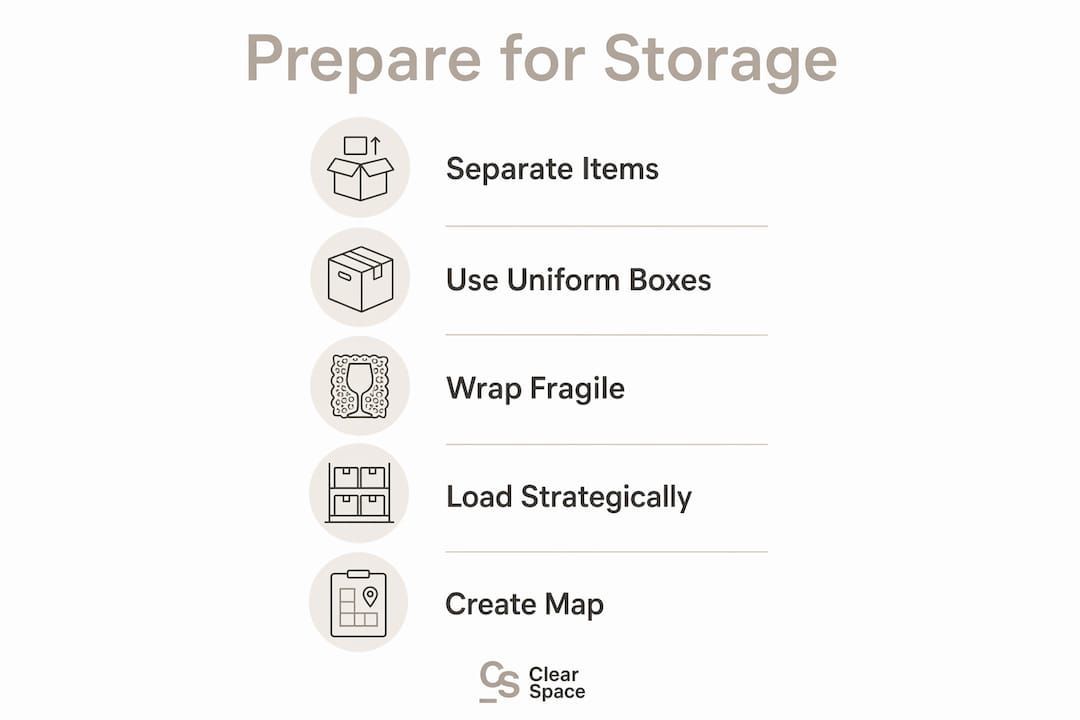
Start by separating what goes into storage from what travels directly to your new home. Items you will not need for weeks, such as seasonal clothing, spare furniture, and decorative pieces, are strong candidates for storage. Everyday essentials, documents, and valuables should stay with you. This separation prevents the frustrating situation of needing something urgently and realising it is buried at the back of a unit.
Use sturdy, uniform-sized boxes rather than a mix of shapes and sizes. Uniform boxes stack cleanly, maximise vertical space, and reduce the risk of collapse. Avoid plastic bags entirely. They trap moisture and offer no structural support, which leads to crushed contents and potential mould on fabric items stored for more than a few weeks.
For fragile and valuable items, bubble wrap and specialist packing materials are non-negotiable. Wrap each piece individually, fill voids in boxes with packing paper, and mark those boxes clearly on multiple sides. Labelling boxes on multiple sides with both contents and a priority classification such as "Open first" or "Long-term" reduces unpacking time significantly. This matters most when you are retrieving items in stages rather than all at once.
When loading the unit itself, keep heavy items at the base, priority boxes at the front, and leave a clear aisle down the middle. Elevate furniture off the floor using pallets or boards, particularly in non-climate-controlled units, to reduce moisture contact and prevent staining or warping.
Pro Tip: Sketch a simple map of your storage unit showing where each category of boxes is placed. A photo on your phone works just as well. This small step means you can locate a specific item in under two minutes rather than spending twenty minutes shifting boxes.
What are the steps to organise your storage during a house move?
A clear process prevents the two most common storage mistakes: booking too late and losing track of what is where. Follow these steps to keep your move organised from start to finish.
- Book storage at the same time as your removal company. Booking storage early reduces cost and eliminates the risk of availability problems. Popular self-storage facilities in areas like St Albans, Harpenden, and Welwyn Garden City fill up quickly around peak moving periods in spring and summer.
- Separate and mark items clearly before moving day. Boxes going into storage need a different colour label or marking from those going directly to your new home. This prevents confusion when the removal team is loading the van and items end up in the wrong place.
- Load strategically. Heavy furniture and appliances go in first and sit at the base of the unit. Boxes you are likely to need first go nearest the door. Keeping a walkway down the middle of the unit is a small change with a large practical benefit. It means you can reach items at the back without dismantling the entire load.
- Plan any visits to the unit during the gap period. If you are in temporary accommodation between moves, decide in advance which items you might need and where they are located. Unplanned visits that turn into full searches waste time and often result in the unit being left in disorder.
- Co-ordinate your retrieval move carefully. When your new home is ready, treat the move out of storage as a second removal. Book the van, confirm access hours with the facility, and have your unit map to hand. This is also the right time to check our moving day preparation checklist to make sure nothing is overlooked.
Storage works best as part of the overall move plan rather than as a last-minute fix. Treating it as an integrated step rather than an afterthought reduces confusion on moving day and keeps the entire transition running to schedule.
How to choose the best storage facility for your move
Location is the first filter. A facility that sits roughly between your old and new home minimises transport time and cost on both the drop-off and collection days. Proximity to your old or new home directly reduces the logistical burden, particularly if you are making multiple trips.
Once you have a shortlist of conveniently located facilities, assess them against these criteria:
- Security features: Look for CCTV coverage, individual unit alarms, secure perimeter fencing, and PIN-access entry. A facility that cannot describe its security measures clearly is one to avoid.
- Access hours: Some facilities offer 24-hour access; others restrict entry to business hours. If you are likely to need items outside of standard working hours, confirm this before signing a contract.
- Drive-up access: Units you can pull a van directly up to save significant time and physical effort when loading and unloading heavy items.
- Climate control: If you are storing wooden furniture, electronics, artwork, or musical instruments, a climate-controlled unit protects against temperature fluctuations and humidity. Standard units are fine for most household goods stored for under three months.
- Customer reviews: Check Google reviews and look specifically for comments about cleanliness, staff responsiveness, and whether the facility was dry and free from pests. Patterns in negative reviews are more informative than individual complaints.
The choice between a professional mover's warehouse and an independent self-storage provider often comes down to access frequency. Self-storage gives you private access that is crucial if you need to retrieve specific items before completing your move. Carrier warehouses are more cost-effective when you simply need items held safely until your new home is ready.
You can also explore smart design ideas for compact storage spaces to think ahead about how your belongings will fit into your new home once they come out of storage.
Key takeaways
Arranging storage between house moves requires choosing the right solution early, packing with retrieval in mind, and treating storage as a planned step rather than a reactive one.
| Point | Details |
|---|---|
| Choose by access frequency | Self-storage suits regular retrieval; SIT and containers suit infrequent access and cost efficiency. |
| Book early | Booking storage alongside your removal company reduces cost and prevents availability problems. |
| Pack for retrieval | Label boxes on multiple sides with contents and priority; keep heavy items at the base and priority boxes near the door. |
| Protect furniture | Elevate items off the floor using pallets or boards, especially in non-climate-controlled units. |
| Map your unit | A simple sketch or photo of your unit layout cuts retrieval time from twenty minutes to two. |
What I have learned from helping people through house move storage
The single most common mistake I see is treating storage as something to sort out once everything else is confirmed. By that point, the best-value units are gone, boxes are packed without any system, and moving day becomes a scramble. Storage is not a backup plan. It is a core part of the move, and it deserves the same planning attention as the removal company or the conveyancer.
The second thing I have noticed is that people consistently underestimate how much they will need to access their stored belongings during the gap period. They assume they can manage with just the essentials they have kept back, then find themselves needing a specific document, a child's toy, or a piece of kitchen equipment that is buried at the back of the unit. The fix is simple: before you load anything, write down the ten items you are most likely to need unexpectedly, and make sure every one of them is near the front of the unit and clearly labelled.
I also think the unit map idea is underused. People hear it and think it sounds overly organised. In practice, it takes five minutes and saves hours. When you are tired, stressed, and trying to find something specific in a unit packed with identical brown boxes, that photo on your phone is worth more than any amount of careful packing.
The broader point is that a well-organised storage arrangement does not just protect your belongings. It reduces the mental load of the entire move. When you know exactly where everything is and have a clear plan for retrieval, the gap between homes feels manageable rather than chaotic.
— Ashlea
How Clearspaceherts can help with your move and storage
If you are preparing for a house move across Hertfordshire and need practical support alongside your storage arrangements, Clearspaceherts offers secure, flexible storage combined with packing support, decluttering, and moving home assistance. Rather than co-ordinating multiple providers, you can bring storage, clearance, and moving help together under one straightforward service.
Clearspaceherts works across St Albans, Harpenden, Hemel Hempstead, Welwyn Garden City, Hatfield, and surrounding areas. Whether you need a single storage solution or full moving home support, the team is built around clear communication and practical, reliable service tailored to your property and timeline. Get in touch to discuss what your move requires.
FAQ
What is Storage-in-Transit and when should I use it?
Storage-in-Transit (SIT) is a carrier-managed service where your removal company stores your belongings between collection and delivery, typically for gaps of 7 to 90 days. It suits moves where you want a single contract covering both transport and storage without managing a separate facility.
How much does temporary storage cost during a house move?
Costs vary by type: self-storage units average £40 to £320 per month, portable containers range from £80 to £360, and SIT services typically cost £120 to £400 per month. Size, duration, and climate control all affect the final price.
How do I keep my belongings safe in a storage unit?
Use sturdy, uniform boxes, label them on multiple sides with contents and priority, elevate furniture off the floor using pallets, and keep a clear aisle through the unit for access. For sensitive items such as electronics or wooden furniture, choose a climate-controlled unit.
When should I book storage for a house move?
Book storage at the same time as your removal company, ideally as soon as your moving dates are confirmed. Late bookings increase cost and risk availability problems, particularly during peak moving periods in spring and summer.
Can I access my belongings during the storage period?
Self-storage units offer private, frequent access during facility opening hours, making them the best option if you need to retrieve items before your new home is ready. SIT and portable container services offer more limited access, as your belongings are held by the provider.
Recommended