
Types of storage solutions for homes: your 2026 guide
Types of storage solutions for homes: your 2026 guide

Home storage solutions are the physical and organisational systems that help you control clutter, protect belongings, and make every room work harder. The main types of storage solutions for homes fall into three categories: built-in and furniture-style storage, vertical and wall-mounted storage, and off-site storage such as self-storage units. Knowing which category suits each room, each item, and your lifestyle is the difference between a home that feels calm and one that feels chaotic. This guide covers all three categories with practical examples, safety advice, and tips drawn from real home organisation practice.
1. types of storage solutions for homes: built-in and furniture-style
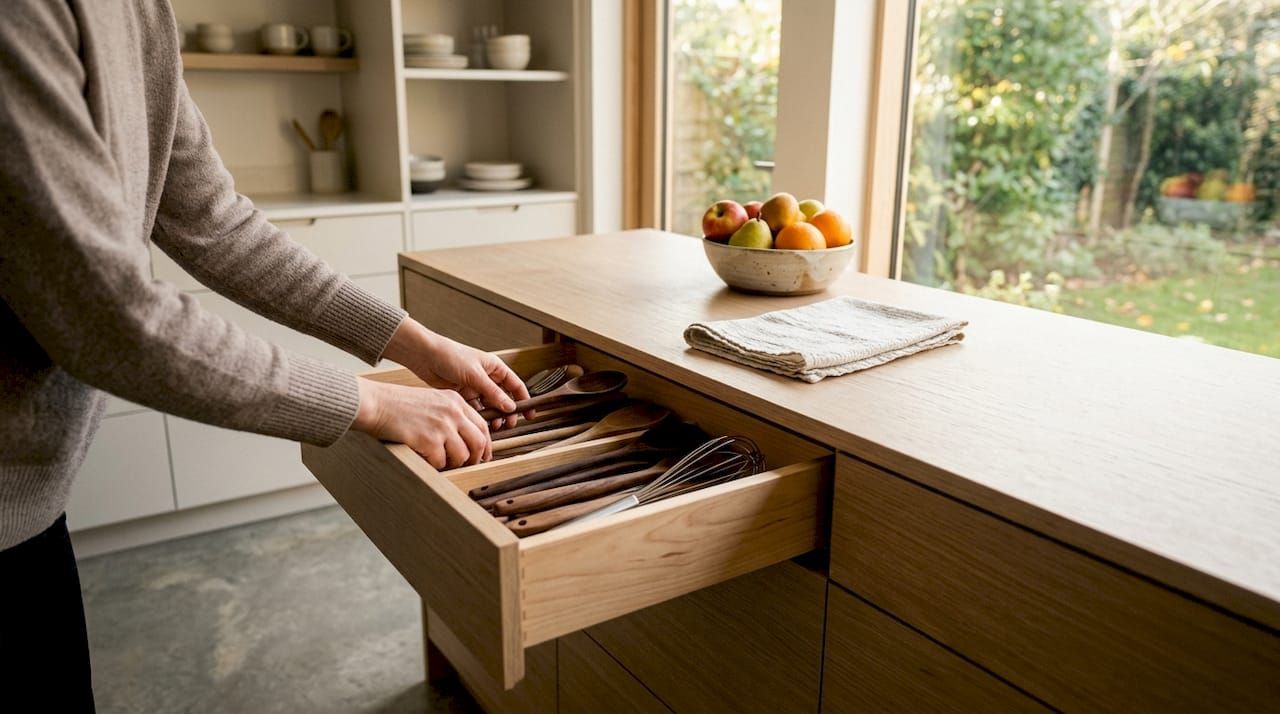
Built-in and furniture-style storage is the backbone of most homes. Storage furniture categories include wardrobes, cabinets, chests of drawers, shelving units, storage beds, ottomans, TV units, and sideboards. These pieces do double duty: they hold your belongings and define the look of a room.
Room-by-room breakdown:
- Bedroom: Fitted wardrobes and storage beds with built-in drawers are the most space-efficient choices. A standard double bed with under-bed drawers can hold duvets, seasonal clothing, and spare bedding without taking up a single extra square metre.
- Living room: TV units with closed cupboards, bookcases, and storage ottomans keep everyday clutter out of sight. An ottoman doubles as a coffee table and holds throws, games, or children's toys.
- Kitchen: Sideboards, kitchen trolleys, and freestanding larder units add storage without requiring a full refit. A trolley on castors moves where you need it and stores utensils, chopping boards, or small appliances.
- Hallway: Shoe cabinets with bench tops solve two problems at once. They keep footwear off the floor and give you somewhere to sit when putting on shoes.
- Home office: Filing cabinets, cube shelving units, and under-desk pedestal drawers keep paperwork and equipment organised without spilling into the rest of the room.
The key principle with furniture-style storage is matching the piece to the frequency of use. Items you reach for daily belong in accessible drawers or open shelves. Items used monthly or seasonally can go in higher cupboards or under-bed boxes.
Pro Tip: Before buying any new storage furniture, spend ten minutes listing what you actually need to store and how often you use it. Buying a large wardrobe when you need shallow shelving wastes both money and floor space.
2. how vertical and wall-mounted storage maximises small spaces
Vertical storage uses the height of a room rather than its floor area. This is the single most underused resource in most British homes, particularly in flats and terraced houses where floor space is limited.
Wall-mounted and over-door storage includes hooks, floating shelves, pegboards, over-the-door racks, and magnetic strips. Each of these adds storage capacity without claiming any floor space at all.
Where vertical storage works best:
- Kitchen: A pegboard or rail above the worktop holds pots, pans, utensils, and spice jars. Magnetic knife strips free up an entire drawer. Wall-mounted shelving above the worktop stores jars and tins that would otherwise crowd the counter.
- Bathroom: Over-the-door racks hold toiletries, towels, and cleaning products. Floating shelves above the toilet use space that is otherwise completely wasted. For bathroom linen specifically, dedicated linen storage such as wall-mounted towel ladders and shelf units keeps things tidy without bulk.
- Entryway: A row of hooks at different heights handles coats, bags, dog leads, and keys. A wall-mounted shoe rack keeps the floor clear.
- Children's rooms: Pegboards and low wall shelves put toys and books within reach without taking up floor space needed for play.
Renters need to think carefully here. Freestanding and non-permanent storage protects your deposit and avoids breaching tenancy terms. Many wall-mounted racks require drilling, which needs landlord permission. Freestanding shelving units, tension-rod organisers, and over-door hooks that use no fixings at all are the safer choice for rented properties.
One safety point that is often overlooked: storage placed in hallways, under stairs, or near doorways must never block fire escape routes. Fire safety guidance is clear that under-stairs storage and corridor shelving should maintain clear access gaps at all times.
Pro Tip: Use clear, labelled containers on wall shelves and in over-door racks. When storage is visible, you use it properly. When it is opaque and unlabelled, it becomes a dumping ground within weeks.
3. when and how to use off-site self-storage units
Off-site storage, most commonly self-storage units, fills the gap between what your home can hold and what you own. It is not a permanent solution for everyday items. It works best for seasonal belongings, furniture during a renovation, items in transit during a move, or possessions you are not ready to part with but do not need daily access to.
On the legal side, self-storage agreements in England and Wales are licences rather than tenancies. They typically run on rolling monthly terms with 14–28 days notice periods. Read the terms carefully before signing, particularly around fee increases and access hours.
Location and security matter as much as size. A facility with 24-hour CCTV, individual unit alarms, and good lighting is worth paying slightly more for. Accessibility also counts: if you need to visit regularly, choose a site within a reasonable drive.
Pro Tip: Before loading a unit, photograph and list everything you put in. A simple notes app on your phone works well. You will thank yourself six months later when you cannot remember whether the camping gear is at home or in storage.
4. practical steps to maximise any storage system at home
The best storage furniture and units fail without a consistent approach to using them. These steps apply whether you are setting up a new wardrobe, a wall shelf, or a self-storage unit.
1. Declutter before you organise. The first rule of organising is to remove what you do not need before buying a single storage product. Use four boxes labelled: donate, recycle, bin, and relocate. Work one room at a time. Adding storage to clutter just hides the problem.
2. Assign a fixed home to every item. Every object you own should have one designated place. When something does not have a home, it ends up on the nearest flat surface. Labelled containers and clear boxes make this system visible and easy to maintain.
3. Use access tiers. Organising by frequency of use is the most practical framework available. Daily items go at eye level or in easy-reach drawers. Weekly items go in lower cupboards or on higher shelves. Seasonal and rarely used items go in loft boxes, under-bed storage, or off-site units.
4. Combine physical and digital organisation. Digital inventory tracking alongside physical storage reduces duplicate purchases and speeds up retrieval. A shared notes document or a free app like Google Keep works well for tracking what is stored where, particularly for off-site units or loft storage.
5. Maintain escape routes. Storage placed in hallways, on landings, or under stairs must never obstruct fire exits. Dwelling fire statistics from GOV.UK show that excessive and poorly positioned storage increases fire risk in homes. Keep corridors clear and do not stack items against doors.
Pro Tip: Review your storage system every six months. A quick 20-minute walk-through of each room to check what has drifted out of place prevents the slow creep of clutter that undoes months of good organisation.
Key takeaways
Effective home storage combines the right furniture, smart use of vertical space, and off-site options, all maintained through consistent decluttering and access-tier organisation.
| Point | Details |
|---|---|
| Three core categories | Built-in furniture, wall-mounted storage, and off-site units each serve different needs and spaces. |
| Renters need non-permanent options | Freestanding shelving and self-storage protect deposits and avoid tenancy breaches. |
| Climate control matters | Use climate-controlled units for wood, leather, photos, and electronics to prevent damage. |
| Declutter first, always | Buying storage before decluttering multiplies clutter rather than solving it. |
| Safety is non-negotiable | Storage must never block fire escape routes, particularly in hallways and under stairs. |
What i have learnt about storage after helping hundreds of hertfordshire homes
The most common mistake I see is people buying storage furniture before they know what they are storing. A beautiful set of matching baskets does nothing if the items going into them are things you should have donated two years ago. The order matters: declutter, then measure, then buy.
The second thing I have noticed is that hidden storage requires more discipline than open storage, not less. Without clear labelling and consistent grouping, a storage bed or a cabinet becomes what I call a clutter vault. You close the door, forget what is inside, and buy duplicates. Clear containers and a simple label maker solve this entirely.
I also think people underestimate how much a single multifunctional piece of furniture can change a room. A storage ottoman in a living room, or a bed with deep drawers in a small bedroom, does the work of two or three separate pieces. Invest in one good multifunctional item rather than three cheap single-purpose ones.
Finally, off-site storage is genuinely useful during life transitions: moving home, renovating, or managing a property between tenancies. It is not a long-term substitute for decluttering, but as a short-term tool it takes real pressure off a home. The key is treating it as temporary and reviewing what is in the unit every few months so it does not become a paid-for dumping ground.
— Ashlea
How Clearspaceherts can help you create more space
If you are working through a move, a declutter, or a property transition in Hertfordshire, Clearspaceherts offers practical, hands-on support at every stage.
Clearspaceherts provides secure storage options across Hertfordshire, with flexible contracts starting from £12.25 per week. The team also offers decluttering support, packing assistance, and moving home help to take the pressure off busy households. For landlords and tenants preparing a property for its next stage, Clearspaceherts combines end of tenancy cleaning with clearance and storage into one straightforward service. Get in touch via clearspaceherts.co.uk to discuss what your property needs.
FAQ
What are the main types of home storage solutions?
The three main categories are built-in and furniture-style storage (wardrobes, storage beds, cabinets), vertical and wall-mounted storage (hooks, shelves, over-door racks), and off-site storage such as self-storage units. Each category suits different items, rooms, and living situations.
What storage options are best for renters?
Renters benefit most from freestanding, modular storage that requires no drilling or permanent fixings, as wall-mounted options often need landlord permission. Self-storage units are also a practical choice for renters who need extra space without altering the property.
How do i choose the right self-storage unit size?
Self-storage unit sizes start from 5 ft x 5 ft for small items and go up to 10 ft x 30 ft for larger household contents. List everything you plan to store before booking, and choose the smallest size that fits safely without overpacking.
Do i need climate-controlled storage?
Climate-controlled units are worth the extra cost for wood furniture, leather, photographs, artwork, and electronics. Standard units are fine for garden tools, plastic items, and metal equipment that are not sensitive to temperature or humidity changes.
How do i stop clutter building up again after organising?
Declutter before adding any new storage, assign a fixed place to every item, and review your system every six months. Using access tiers, where daily items are stored within easy reach and seasonal items are stored further away, prevents the gradual drift back into clutter.