
Why declutter before moving: save money and stress
Why declutter before moving: save money and stress

Decluttering before moving is the process of intentionally reducing your belongings before relocation so you transport only what you genuinely need, want, and use. Done properly, it cuts your moving costs, shrinks your packing workload, and gives you a measurable sense of control at one of the most stressful points in adult life. The benefits of decluttering extend well beyond a tidier removal van. Research confirms that clutter raises cortisol levels linked to chronic stress, meaning the items you carry into your new home carry a psychological cost too. If you are weighing up whether to declutter before or after the move, the answer is always before.
Why declutter before moving: the cost and logistics case
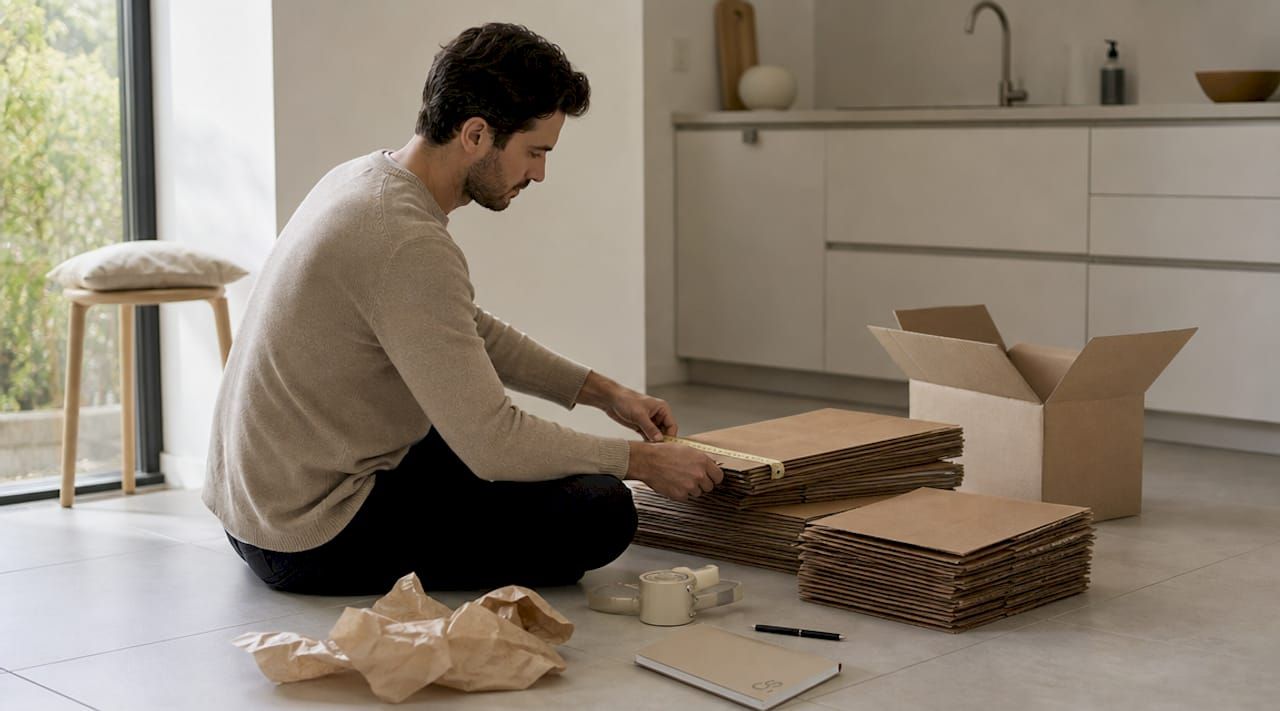
Moving companies price their services by weight, volume, and labour time. Every box you eliminate directly reduces all three. Decluttering before a move can save over £400 in moving costs, a figure that reflects fewer boxes, less van space, and shorter handling time on the day. That saving alone makes the case for sorting your belongings before a single box is taped shut.
The logistical benefits compound beyond the removal bill. Fewer items mean fewer boxes to label, fewer rooms to unpack at the other end, and a faster settling-in process overall. Most people underestimate how much unpacking drains energy in the first week of a new home. Arriving with only the things you actually want removes that hidden workload entirely.
| Benefit | What it means in practice |
|---|---|
| Lower removal costs | Fewer boxes and less weight reduce the price quoted by removal companies |
| Faster packing | Only packing items you intend to keep cuts hours from the preparation process |
| Quicker unpacking | Fewer boxes at the destination means less time before your new home feels settled |
| Reduced storage needs | Items you no longer need do not require paid storage during or after the move |
| Less decision fatigue | Sorting before packing means you make choices once, not twice |
Pro Tip: Get a removal quote before and after your declutter. Many people in Hertfordshire are surprised to find the revised quote is noticeably lower, which turns the decluttering effort into a direct financial return.
The common challenges when moving house almost always include underestimating volume. Addressing that volume before moving day is the most practical step you can take.
What is the best timeline for decluttering before a move?
The optimal point to begin is six to eight weeks before moving day. Starting earlier than that risks revisiting decisions you have already made, which wastes time and creates confusion about what has been sorted. Starting later leaves insufficient time to donate, sell, or dispose of items responsibly, and you end up either rushing or moving things you intended to discard.
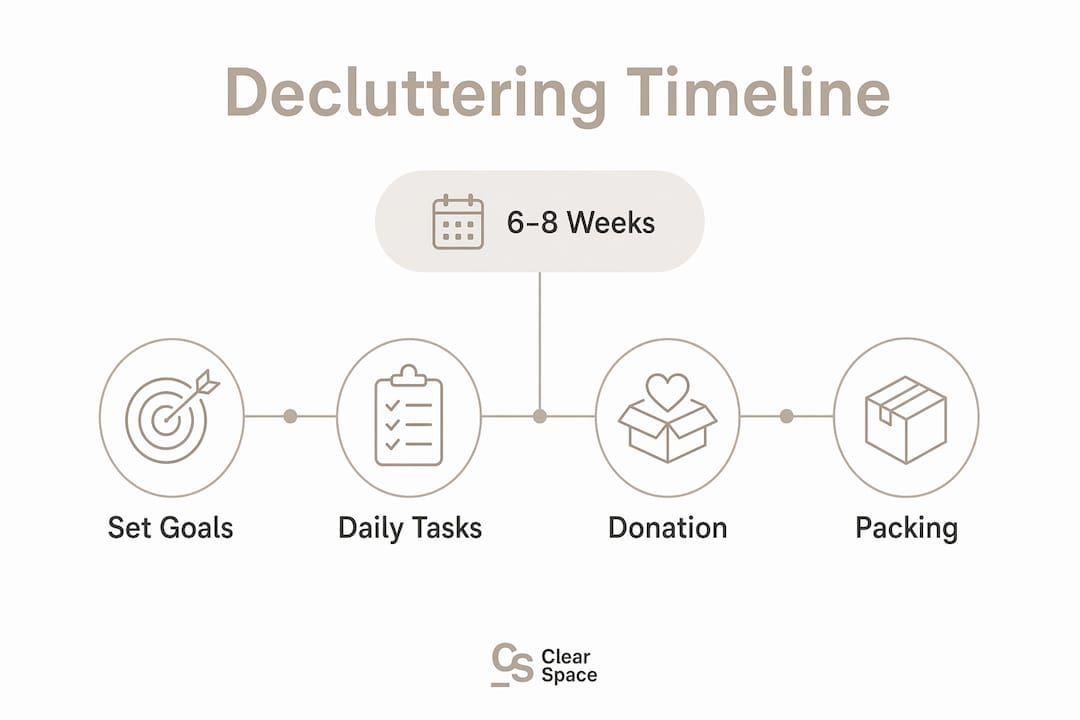
A room-by-room approach works better than attempting the whole house at once. The sequence matters. Start with low-emotion rooms such as bathrooms, utility cupboards, and garages. These spaces contain high volumes of items with low sentimental value, which means decisions come quickly and you build momentum before tackling areas like the loft or children's bedrooms where every item carries a memory.
Here is a practical sequence to follow:
- Bathrooms and toiletries. Discard expired products, duplicates, and anything unused for six months or more.
- Kitchen. Remove duplicate utensils, appliances you rarely use, and anything broken or outdated.
- Garage and utility spaces. Clear tools, seasonal items, and anything stored "just in case" that has not been touched in a year.
- Living areas. Books, media, decorative items, and furniture that will not suit the new space.
- Bedrooms. Clothing, accessories, and personal items. Use the one-year rule: if you have not worn or used it, let it go.
- Loft and sentimental storage. Tackle this last, when your decision-making confidence is at its highest.
Breaking decluttering into small daily goals such as five items a day prevents the task from feeling unmanageable. Five items sounds trivial, but over six weeks that is over two hundred decisions made calmly rather than in a last-minute panic.
Pro Tip: Use a printed declutter checklist for moving and tick off each room as you complete it. The visual progress is genuinely motivating and stops you from losing track of what still needs attention.
What are the mental health benefits of decluttering before a move?
The psychological case for sorting your home before you relocate is backed by solid research. Organised homes show healthier cortisol patterns and measurably less mental strain than cluttered ones. For anyone managing the already considerable stress of a house move, reducing the visual noise in your environment is one of the most effective things you can do.
"Clutter competes for your attention whether you are aware of it or not. Every unresolved item in your home is an open loop your brain is quietly trying to close."
Environmental clutter increases cognitive load by creating competing visual stimuli that drain focus. During a move, when your mental bandwidth is already stretched across logistics, finances, and admin, a cluttered home makes everything harder. Clearing it removes that drain before it compounds.
The physical side of decluttering carries its own rewards:
- Sorting, lifting, and carrying during a declutter session burns approximately 100 to 200 calories per hour, which is comparable to a moderate walk.
- Completing even small organising tasks produces a genuine sense of accomplishment that lifts mood and energy.
- Better-organised spaces correlate with improved sleep quality, which matters enormously when you are managing a complex move.
- The act of letting go of unused possessions reduces the low-level guilt that accumulates around items you know you should have dealt with years ago.
The mental shift that follows a thorough declutter is not subtle. Most people describe feeling lighter, more focused, and more optimistic about the move itself. That is not coincidence. It reflects real neurological changes in how your brain processes a calmer, less stimulating environment.
What mistakes should you avoid when decluttering for a move?
The most common error is trying to declutter and pack simultaneously. Doing both at once causes decision fatigue, which means you end up packing items you never intended to keep simply because you ran out of mental energy to decide. Finish decluttering completely before a single box is packed.
- Avoid "maybe" boxes. Postponing decisions into a maybe pile creates extra unpacking stress at the other end, when your energy is even lower. Make the call now: donate, sell, recycle, or discard.
- Do not start too late. Beginning with fewer than three weeks to go leaves no time for charity collections, online sales, or responsible disposal of larger items.
- Do not start too early without a system. Starting ten or twelve weeks out without a clear room-by-room plan leads to revisiting the same decisions repeatedly.
- Handle sentimental items last, not first. Tackling emotionally charged belongings at the start of the process stalls momentum and leads to keeping far more than you intended.
- Do not declutter alone if the volume is large. A second pair of hands, whether a friend or a professional service, speeds up the process and provides an objective perspective on items you are on the fence about.
Pro Tip: For items you are unsure about, ask one simple question: "Would I buy this again today?" If the answer is no, it does not belong in your new home.
How to put decluttering into practice before your move
Setting a clear goal for each room before you start makes the process far more manageable. Rather than approaching a room with a vague intention to "sort through things," decide in advance what the outcome should be: a specific number of bags for donation, a cleared shelf, or a category of items fully resolved.
| Route | Best for | Where to go |
|---|---|---|
| Donate | Good-condition clothing, books, household items | British Heart Foundation, local charity shops, Freecycle |
| Sell | Higher-value items in good condition | Facebook Marketplace, eBay, local car boot sales |
| Recycle | Paper, electronics, textiles, glass | Local council recycling centres, Hertfordshire Household Waste sites |
| Discard | Broken, expired, or unsalvageable items | General waste or bulky waste collection |
Follow this practical sequence for each room:
- Remove everything from the space so you can see what you actually own.
- Sort into four categories: keep, donate or sell, recycle, and discard.
- Deal with the non-keep piles immediately. Do not leave them in the hallway.
- Return only the keep items to the room, organised by how frequently you use them.
- Photograph items for sale before they leave the house to save time listing them later.
For items you want to keep but cannot take to the new property straight away, putting things into storage first is a practical middle step that keeps your move manageable without forcing permanent decisions under pressure.
Key takeaways
Decluttering before moving reduces costs, shortens the packing process, and measurably improves mental wellbeing by removing the cognitive load of excess belongings before you relocate.
| Point | Details |
|---|---|
| Start six to eight weeks out | This window allows time for donations, sales, and responsible disposal without rushing. |
| Tackle low-emotion rooms first | Bathrooms and garages build momentum before you reach sentimental areas. |
| Never declutter and pack at once | Doing both simultaneously causes decision fatigue and results in moving items you intended to discard. |
| Avoid "maybe" boxes | Unresolved decisions made before the move become a heavier burden after it. |
| The savings are real | Reducing volume and weight directly lowers removal costs, often by several hundred pounds. |
What I have learned from watching people move
From Ashlea at Clearspaceherts:
After working with homeowners, tenants, and landlords across Hertfordshire through dozens of moves, the pattern I see most often is this: people know they should declutter, they intend to declutter, and then they run out of time and move everything anyway. The regret that follows is almost universal. Within three months of moving in, they are looking at boxes they never unpacked and wondering why they paid to transport them.
The thing most moving guides do not tell you is that decluttering is not really about tidiness. It is about making a decision about your life before the chaos of moving day takes that decision away from you. Once you are in the thick of packing, every item becomes "I'll deal with it later." Later never comes.
I also think people underestimate how much the emotional relief matters. The clients who arrive at their new home with only the things they chose to bring describe the experience very differently from those who moved everything and sorted it out afterwards. The first group feel like they are starting fresh. The second group feel like they brought their old problems with them.
If you are feeling overwhelmed by where to start, the bathroom is always the right answer. It is quick, it is satisfying, and it proves to yourself that you can do this.
— Ashlea
How Clearspaceherts can help with your move in Hertfordshire
If the decluttering process feels like too much to manage alongside everything else a move involves, Clearspaceherts is here to help.
Clearspaceherts provides moving home help across Hertfordshire, including hands-on decluttering support, packing assistance, property clearance, and storage solutions. Whether you need someone to work through a room with you or a full property clearance service before you hand back the keys, the team covers St Albans, Harpenden, Hemel Hempstead, Welwyn Garden City, Hatfield, and surrounding areas. Rather than juggling multiple companies, you can use one company to handle decluttering, clearance, and moving support from start to finish. Get in touch with Clearspaceherts to discuss what your move needs.
FAQ
Why should I declutter before moving rather than after?
Decluttering before moving means you only pay to transport items you genuinely want to keep, which reduces removal costs and unpacking time. Sorting after the move is significantly harder because energy is low and boxes are already in the way.
How long before moving should I start decluttering?
The recommended window is six to eight weeks before moving day. This gives you enough time to donate, sell, or dispose of items properly without the pressure of an imminent deadline.
Which rooms should I declutter first?
Start with low-emotion, high-volume rooms such as bathrooms, garages, and utility spaces. These areas produce quick decisions and build the momentum you need before tackling sentimental spaces like lofts or children's rooms.
Does decluttering actually reduce moving costs?
Yes. Removal companies price by weight and volume, so reducing the number of boxes directly lowers the quote. Decluttering before a move can save several hundred pounds depending on the volume removed.
What should I do with items I cannot take but do not want to discard?
Short-term storage is a practical solution for items you want to keep but cannot accommodate immediately. It avoids forcing permanent decisions under the pressure of moving day.