
Things to sort before moving day: your checklist
Things to sort before moving day: your checklist
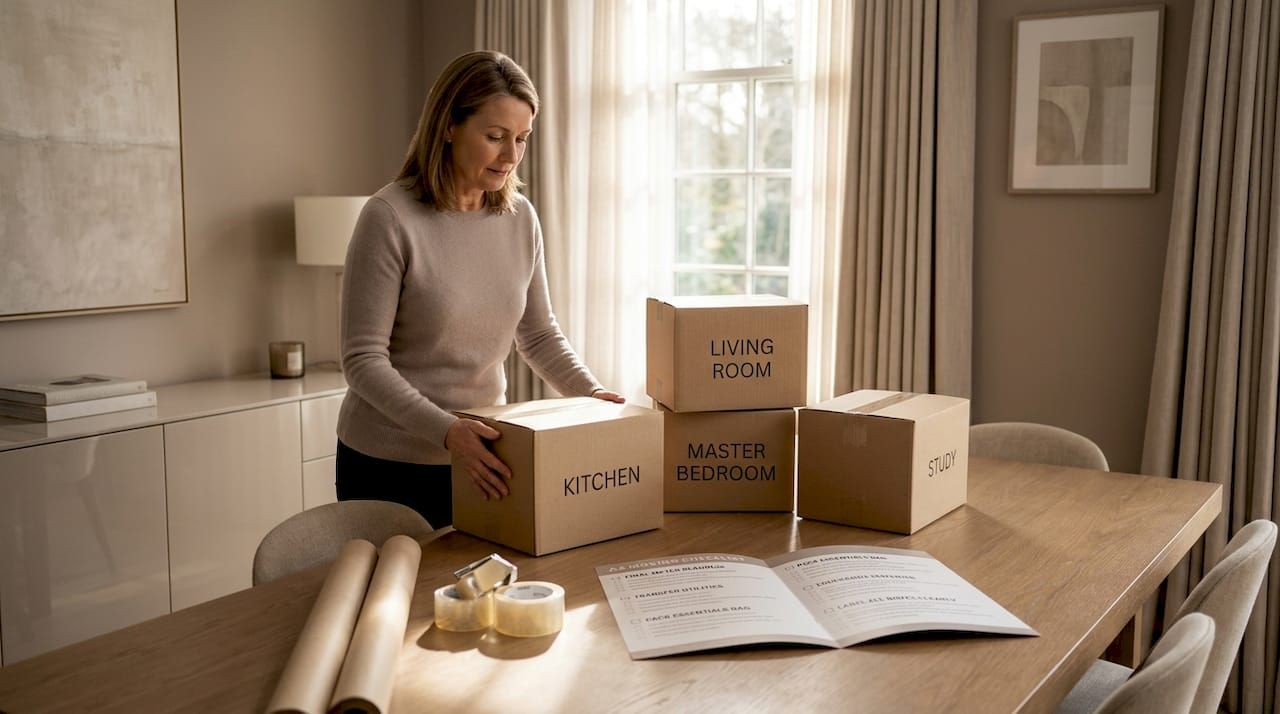
Sorting your belongings before moving day means organising everything you own into clear priorities: what must travel with you, what gets packed early, what leaves the house entirely, and what gets dealt with on the day itself. Getting this right is the difference between a calm, controlled move and a frantic scramble through unlabelled boxes. The things to sort before moving day fall into four broad categories: critical documents and valuables, items to declutter or donate, a structured packing order, and your paperwork. Start with the first category at least four weeks out, and the rest follows naturally.
1. Secure your documents and valuables first
The single most important step before any packing begins is pulling your critical documents and valuables out of general circulation. U-Haul recommends carrying passports, wills, social security cards, and other important documents in a clearly marked folder, keeping them with you rather than in the removal van. This matters because once boxes are loaded and stacked, retrieving a single document becomes a significant problem.
Valuables including jewellery, cash, spare keys, and small electronics deserve the same treatment. Place them in a dedicated bag or locked box that stays in your personal vehicle throughout the move. Families should secure paperwork, keys, and valuables early, pulling them into a secure location to prevent loss and backtracking. Doing this first removes the risk of these items being packed accidentally with general household goods.
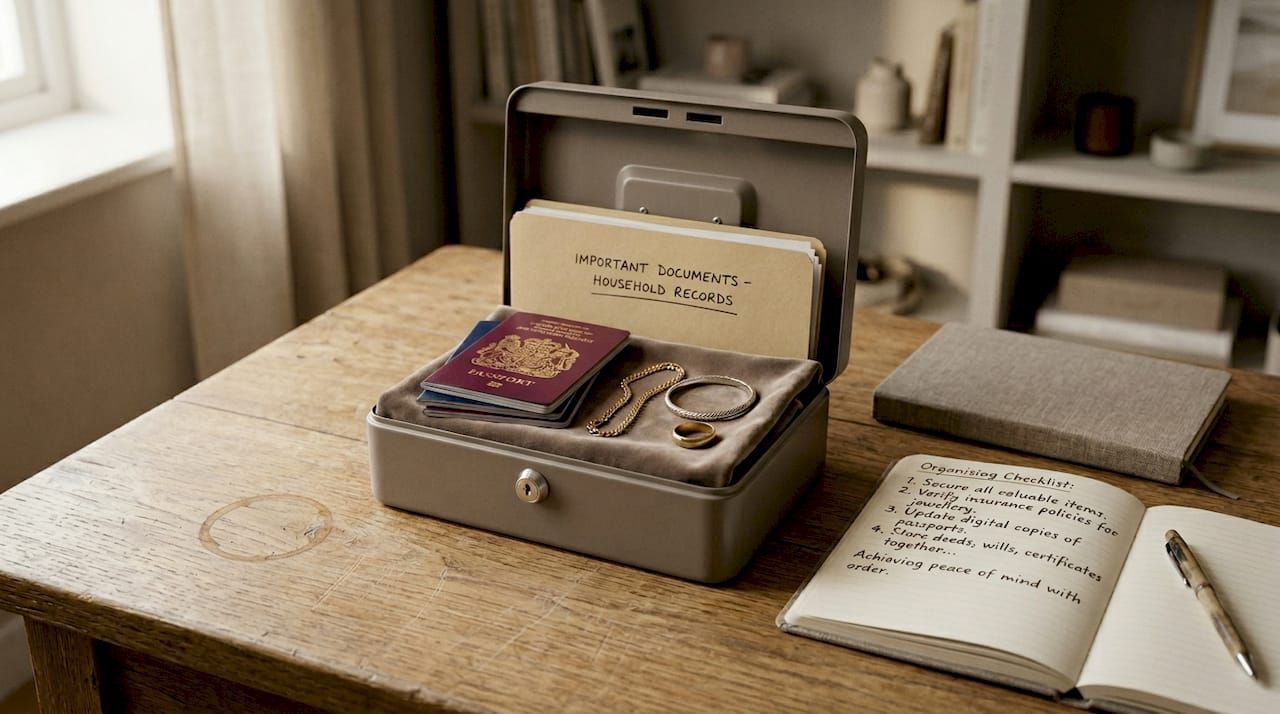
Pro Tip: Label your documents folder in large, clear text and photograph the contents before you move. If anything goes missing in transit, you have a record of exactly what was there.
2. Declutter room by room before you pack a single box
Decluttering before packing reduces the number of boxes you move and cuts costs while giving you a genuinely fresh start at the new property. The most effective method is a four-category system applied to every room: keep, donate, sell, and bin. Anything that does not earn a clear place in one of the first two categories should leave the house before moving day.
Start with spaces you use least. Attics, garages, and spare bedrooms accumulate years of forgotten items and are the best places to begin. PODS recommends starting with spaces you do not use daily, like the attic, garage, or basement, before moving to less-frequented rooms. This approach means you are making the harder decisions first, when your energy is highest.
Work in focused sessions rather than marathon days. Dedicate one to two hours per zone over three to four weeks, working backwards from your move date. This keeps the process manageable and prevents decision fatigue, which is the main reason people abandon decluttering halfway through.
| Category | What it means |
|---|---|
| Keep | Items you use regularly or genuinely need at the new property |
| Donate | Good-condition items that local charities, food banks, or neighbours can use |
| Sell | Higher-value items worth listing on Facebook Marketplace or a car boot sale |
| Bin | Broken, expired, or genuinely unusable items that serve no one |
Photograph items before you dispose of them, particularly furniture or appliances. This takes thirty seconds per item and gives you a useful record if questions arise later about what was in the property.
3. Handle sentimental items with a memory box rule
Sentimental items are the category most likely to derail a declutter. Cards, photographs, children's artwork, and inherited objects all carry emotional weight that makes it difficult to sort them quickly. The most practical solution is a strict one: one labelled memory box per family member for sentimental items. This constraint prevents the keep pile from expanding uncontrollably and speeds up the sorting process considerably.
The box size is the limit. If something does not fit, you choose what matters most. This is not about discarding memories. It is about giving them a defined, manageable home rather than letting them spread across multiple boxes that never get properly unpacked.
4. Sort your pantry and fridge before the final week
Perishable food is one of the most overlooked categories when preparing for a move. U-Haul advises cleaning out the pantry and refrigerator about one week before moving day, donating sealed non-perishables and clearing open food to avoid waste. A forgotten jar of pasta sauce or a bag of flour adds unnecessary weight and creates a genuine mess if it breaks in transit.
Start using up perishables two to three weeks before moving day. Plan meals around what is already in the cupboards. Sealed, non-perishable items in good condition can go to a local food bank. This is one of the simplest ways to reduce the volume of what you transport while doing something genuinely useful with it.
5. Establish the right packing order
Packing order is not obvious, but it has a significant effect on how smoothly moving day runs. The rule is straightforward: pack the rooms you use least first, and leave daily essentials until last. Guest bedrooms, home offices, dining rooms, and seasonal storage areas should be boxed up two to three weeks before the move.
Leaving daily necessities such as kitchenware and bedding unpacked and accessible until the final days keeps daily routines uninterrupted. Packing your main bedroom or kitchen too early creates unnecessary hardship during the weeks leading up to the move. Save these rooms for the final two to three days.
Pro Tip: Pack a dedicated "first night" box for each family member containing a change of clothes, toiletries, phone charger, and any medication. Load it last so it comes off the van first. This single box removes the need to hunt through everything on arrival.
Use suitcases for clothing and soft items rather than boxes. They are easier to carry, already have handles, and make better use of space in the removal vehicle. Label every box with both the destination room and a brief description of contents. Labelled boxes by room and contents significantly reduce stress and confusion during unpacking. This is a small step that pays back considerable time at the other end.
6. Sort your paperwork before you move
Organising paperwork before a move is one of the tasks most people leave too late, and it causes real problems. Utility transfers, address changes, mortgage completions, and tenancy agreements all require specific documents at specific moments. If those documents are buried in a box somewhere, the process stalls.
The core categories to organise are:
- Identity documents: passports, birth certificates, driving licences
- Financial records: bank statements, mortgage documents, insurance policies
- Tax records: HMRC correspondence, P60s, self-assessment returns
- Property documents: tenancy agreements, surveys, completion paperwork
- Medical records: GP letters, prescriptions, vaccination records
Tax and financial documents should be organised and some content digitised or shredded to reduce clutter before moving. HMRC generally recommends retaining tax records for at least six years, so anything older than that can be reviewed for shredding. Digitising key documents using a free scanning app such as Adobe Scan or Microsoft Lens takes an afternoon and removes the risk of physical loss entirely.
Keep all active paperwork in a single locked box or secure folder that travels in your personal vehicle. Do not pack it with general household items. The few minutes this takes at the start of the process will save significant time and stress on completion day.
7. Sort items destined for storage separately
If you are using a storage unit during the move, those items need to be sorted and labelled as a distinct category from day one. Mixing storage items with moving boxes creates confusion that compounds over time. Items going into storage should be clearly marked, ideally with a different coloured label or tape, and grouped together in one area of the property before the move begins.
Consider what you actually need access to in the first three months at the new property. Seasonal items, spare furniture, and archive boxes are good candidates for putting into storage first. Items you will need within the first week should never go into storage, regardless of how convenient it seems on moving day.
8. Prepare the property for handover
If you are leaving a rented property, the condition you leave it in directly affects your deposit. Sort through every room with the original inventory in hand and note any changes. Clean as you empty each room rather than leaving it all to the final day. This approach is far less overwhelming and produces better results.
Landlords and letting agents in Hertfordshire increasingly expect properties to be returned in a professionally cleaned condition. Sorting this in advance, rather than scrambling on the final day, protects your deposit and avoids disputes.
Key takeaways
Sorting belongings before moving day requires starting with documents and valuables, decluttering systematically by room, and packing in the correct order to keep daily life functional until the final days.
| Point | Details |
|---|---|
| Documents and valuables first | Secure passports, wills, jewellery, and keys in a personal bag before any packing begins. |
| Declutter before you pack | Use a four-category system across every room to reduce volume and moving costs. |
| Pack in the right order | Start with least-used rooms and leave kitchens and bedrooms until the final two to three days. |
| Organise paperwork early | Keep all active documents in one locked folder that travels with you, not in the van. |
| Label everything clearly | Mark every box with destination room and contents to cut unpacking time significantly. |
What I have learned from watching people move
I have seen a lot of moves go wrong in very predictable ways. The most common mistake is not leaving things too late. It is mixing categories. Valuables end up in general boxes. Paperwork gets packed with kitchen items. The "keep" pile absorbs everything that feels too hard to decide about. By the time moving day arrives, nobody knows what is where.
The four-category declutter system sounds simple, but most people apply it inconsistently. They are rigorous in the spare bedroom and then completely abandon it in the kitchen, where every gadget suddenly feels indispensable. The honest truth is that if you have not used something in twelve months, you will not use it in the next twelve either. Moving is the best opportunity you will ever have to reset this.
The other thing I would push back on is the idea that professional help is only for people who cannot manage alone. Using professional packing support for specific rooms or categories, particularly kitchens and home offices, is simply a more efficient use of your time. The cost is almost always lower than people expect, and the time saved is significant. A move that takes a family two exhausting weekends can often be handled in a single day with the right support.
Start earlier than you think you need to. The workload never shrinks as moving day approaches. It only grows.
— Ashlea
How Clearspaceherts can help you prepare
Clearspaceherts supports homeowners and families across Hertfordshire with the practical side of moving: sorting, decluttering, packing, and storage. If the checklist above feels manageable in theory but overwhelming in practice, that is exactly where we come in. Our team works alongside you to sort and pack at whatever pace suits your timeline, whether that is a single session on a specific room or support across the full move. We cover St Albans, Harpenden, Hemel Hempstead, Welwyn Garden City, Hatfield, and surrounding areas. Find out more about our moving home help or get in touch to talk through what you need.
FAQ
What should I sort first before moving day?
Secure your critical documents and valuables first, including passports, wills, insurance papers, jewellery, and spare keys. Keep these in a personal bag or locked box that travels with you rather than in the removal van.
How early should I start decluttering before a move?
Start decluttering at least three to four weeks before moving day, working in focused sessions of one to two hours per room or zone. Beginning with storage areas like the attic and garage gives you the clearest wins early on.
What items should I donate before moving?
Good-condition clothing, books, sealed non-perishable food, and functional household items are all worth donating to local charities or food banks before a move. Donating before packing reduces your load and avoids transporting items you will not use at the new property.
Why is sorting paperwork before moving so important?
Organised paperwork is required for utility transfers, address changes, and legal processes that happen around completion day. Losing key documents in a move can delay these processes significantly and cause real financial and legal complications.
What goes in a first-night essentials box?
A first-night box should contain a change of clothes, toiletries, phone chargers, any medication, and basic kitchen items such as a kettle, mugs, and teabags. Pack it last so it is the first thing off the van at the new property.
Recommended