
How to create storage space in a small home
How to create storage space in a small home
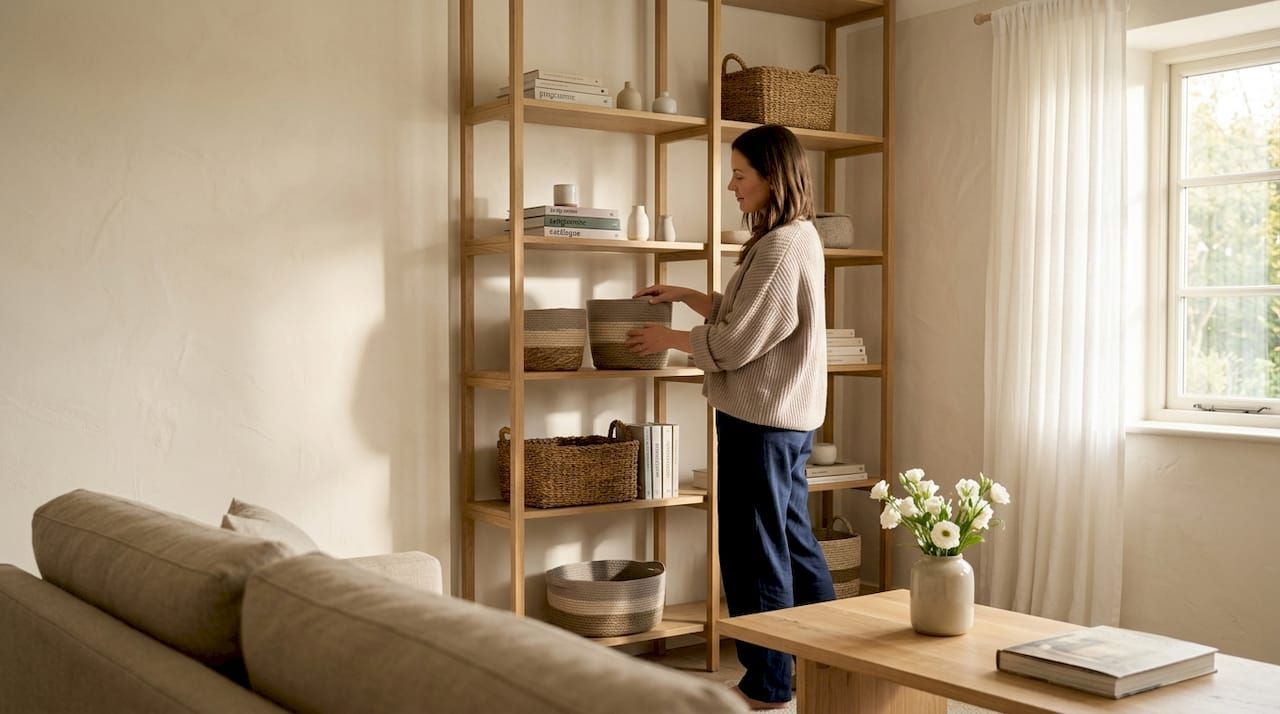
Creating storage space in a small home is defined by three core strategies: exploiting vertical height, choosing multipurpose furniture, and maintaining a consistent organisation system. Small homes, typically under 50 square metres, present a specific challenge that interior designers call "spatial efficiency." The good news is that brands like IKEA, tools like vacuum-seal bags, and methods like systematic decluttering have made it possible to transform even the most cramped flat into a genuinely functional living space. This guide covers every practical method, from floor-to-ceiling shelving to renter-friendly built-ins, so you can act immediately without a large budget.
How to use vertical space to maximise storage in small homes
Vertical space from floor to ceiling is the single most powerful storage strategy available in a compact home. Most people stop at eye level. Everything above that point, right up to the ceiling, is free real estate that costs nothing to use.
Wall-mounted shelving is the starting point. Floating shelves installed above doorways, along hallway walls, or above kitchen worktops add metres of storage without consuming a centimetre of floor space. In kitchens, stacking open shelves from worktop to ceiling can hold crockery, dry goods, and cookbooks that would otherwise pile up on surfaces. In bathrooms, a tall ladder shelf or a floor-to-ceiling cabinet next to the basin replaces a cluttered windowsill and a chaotic under-sink cupboard in one move.
Pegboards deserve more credit than they receive. Mounted on a kitchen or hallway wall, a pegboard with hooks, baskets, and small shelves holds tools, bags, keys, and accessories in a way that is both visible and accessible. The IKEA SKÅDIS pegboard system is a popular choice because it is modular, affordable, and requires only two wall fixings.
- Install shelves at least 30 cm above door frames to use the full wall height
- Use a sturdy step stool or library ladder for high shelves so they remain genuinely usable
- Add hooks to the sides of kitchen cabinets for mugs, utensils, or cleaning cloths
- Mount a magnetic knife strip on a kitchen wall instead of using a block that takes up worktop space
- Use vertical dividers inside cupboards to store baking trays, chopping boards, and lids upright rather than stacked
Pro Tip: Fit your highest shelves with baskets or lidded boxes rather than open stacks. They look tidier from below, and you can label the front of each basket so you know exactly what is up there without climbing to check.
What multipurpose furniture does for small space storage
Multipurpose furniture prevents single-purpose clutter in small homes and creates a sense of openness that fixed storage units cannot match. Designer Rachel Robinson advises combining functionalities wherever possible, so every piece of furniture earns its floor space twice over.
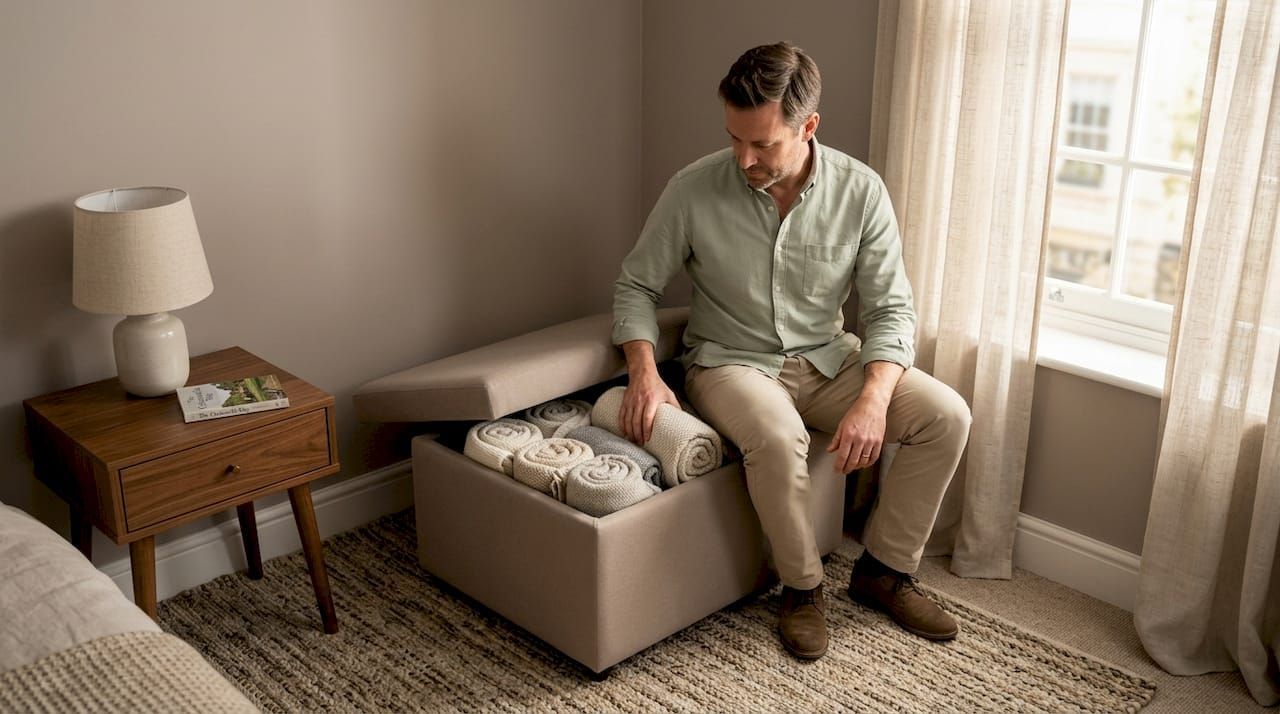
The principle is straightforward. A standard sofa takes up floor space and does nothing else. A sofa with under-seat drawers takes up the same floor space and stores spare bedding, board games, or seasonal clothing. The room looks identical, but you have gained the equivalent of a small chest of drawers.
Here are the most effective multipurpose furniture choices for compact living:
- Storage ottomans. A large ottoman with a lift-up lid works as a coffee table, extra seating, and a storage box for throws, cushions, or children's toys. Place one in a living room and you eliminate the need for a separate toy box or blanket basket.
- Lift-up bed frames. A hydraulic lift-up bed base reveals a full platform of storage beneath the mattress. This is one of the largest hidden storage areas in any home and works particularly well for bulky items like suitcases, duvets, and out-of-season clothing.
- Benches with drawers. A hallway bench with two or three drawers underneath replaces a shoe rack, a coat hook unit, and a side table. It also gives you somewhere to sit while putting on shoes, which is a small but genuine daily improvement.
- Fold-down desks. A wall-mounted fold-down desk takes up roughly 15 cm of depth when closed and provides a full work surface when open. Paired with a floating shelf above it for a monitor or books, it creates a functional home office in a space no larger than a wardrobe door.
- Shelving room dividers. In open-plan studios, a bookcase or modular shelving unit used as a room divider defines separate zones while providing storage on both sides. A 25 square metre micro-flat in London used a birch plywood room divider with built-in hanging and drawer storage to separate sleeping and living areas without sacrificing a single centimetre of usable space.
Pro Tip: Before buying any new furniture, measure the floor space it will occupy and ask whether it could do two jobs instead of one. If the answer is no, look for an alternative that does.
How to use wasted spaces under beds, stairs, and doors
The spaces most people ignore are often the most valuable. Under a standard double bed sits roughly 40 cubic feet of storage, and under-bed drawers and rolling bins are among the most effective ways to use it without adding visual clutter to a bedroom.
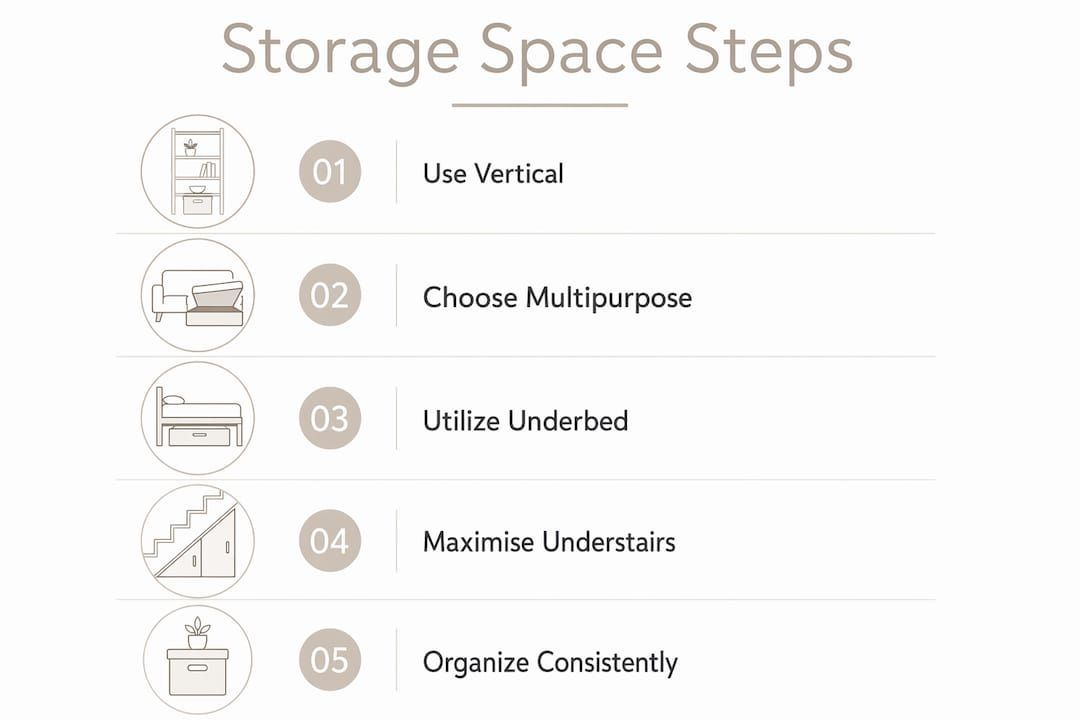
Rolling bins are particularly useful because they pull out fully, making it easy to access items at the back. Flat, lidded boxes work well for items you access less frequently, such as spare bedding or archived paperwork. For beds without a built-in base, simple bed risers lift the frame by 10 to 15 cm, creating enough clearance for standard storage boxes.
Under-stair storage is another area with significant untapped potential. The key design principle here is accessibility. Pull-out drawers under stairs outperform fixed shelves in spaces deeper than 24 inches because fixed shelves create inaccessible pockets at the back that quickly become forgotten dumping grounds. Sliding drawers bring everything to you, which means you actually use the storage rather than avoiding it.
| Space | Best solution | Why it works |
|---|---|---|
| Under bed | Rolling bins or hydraulic base | Full access, no visual clutter |
| Under stairs | Pull-out drawers (max 24 inch depth) | Prevents inaccessible back pockets |
| Behind doors | Over-door organisers with pockets | Uses dead wall space, no fixings needed |
| Inside cabinet doors | Adhesive hooks or small racks | Holds lids, foil, cleaning products |
| Top of wardrobes | Labelled lidded boxes | Stores seasonal or rarely used items |
Behind doors is the third overlooked zone. An over-the-door organiser with clear pockets holds shoes, cleaning products, toiletries, or pantry items depending on the room. These require no drilling and are removed in seconds, making them ideal for renters.
For seasonal clothing, vacuum-seal bags reduce volume by up to 80%, which means a full winter wardrobe can compress into the space of two folded jumpers. That is a transformative gain for anyone storing bulky coats and knitwear under a bed or on a high shelf.
How to set up an organisation system that actually lasts
Storage solutions fail when there is no system behind them. Labelled zones and consistent containers act as navigation tools in a small home, allowing you to find items quickly and return them to the right place without thinking.
The most reliable approach uses standardised containers across each room, labelled with item name, size, and quantity where relevant. When every bin looks the same and every label follows the same format, the system becomes self-maintaining. You know immediately when something is out of place because it does not match the surrounding containers.
- Audit first. Before buying a single box or shelf, empty each storage area and sort everything into four categories: Keep, Donate, Trash, and Relocate. A room-by-room decluttering plan typically takes two to six months to complete properly, but even one room done thoroughly makes an immediate difference.
- Assign zones. Each category of item gets a fixed location. Cleaning products live under the kitchen sink. Spare bedding lives in the ottoman. Paperwork lives in the fold-down desk drawer. Zones prevent the drift that causes clutter to re-accumulate.
- Label everything. Use a label maker or printed labels on the front of every bin, basket, and box. Labels are not just for finding things. They are a commitment to putting things back in the right place.
- Build a daily reset habit. A five-minute sweep each evening, returning items to their zones, prevents the slow accumulation that makes a small home feel chaotic. Pair this with a weekly declutter routine to catch anything that has drifted.
- Review quarterly. Every three months, reassess what you are storing. Needs change, and a storage system that worked in January may be holding items you no longer need by April.
Pro Tip: Use the same brand of storage box throughout a room. Matching containers stack more efficiently, look calmer, and make the space feel larger than a mix of different shapes and sizes.
Budget-friendly and renter-friendly storage ideas
Renters face a specific constraint: they cannot make permanent changes to walls or floors. The good news is that the most effective small-space storage solutions require very little in the way of permanent fixtures.
IKEA PAX wardrobe frames combined with plywood can create a built-in look for under £500, attached to walls with just a few screws that leave minimal damage at the end of a tenancy. One widely shared DIY project completed the full build solo in roughly a week, producing a floor-to-ceiling fitted wardrobe that looked custom-made. The units were removed cleanly when the tenant moved out.
- Adhesive hooks from brands like Command hold up to 3.6 kg and remove without damaging paintwork, making them ideal for kitchens, bathrooms, and hallways
- Freestanding shelving units from IKEA, such as the KALLAX or BILLY range, require no wall fixings and can be reconfigured or taken to a new property
- Tension rods fitted inside kitchen cupboards create a second tier for plates or a hanging rail for cleaning sprays
- Modular cube storage systems stack and rearrange to fit different room layouts, making them practical for renters who move frequently
- Floating shelves with keyhole brackets can be installed with two screws per shelf and filled with polyfilla when you leave
| Solution | Approximate cost | Renter-friendly |
|---|---|---|
| IKEA PAX built-in hack | Under £500 | Yes, minimal wall damage |
| Command adhesive hooks | £5 to £15 per pack | Yes, damage-free removal |
| KALLAX freestanding unit | £50 to £150 | Yes, no fixings required |
| Tension rod shelf dividers | £5 to £10 | Yes, no fixings required |
| Over-door organisers | £10 to £30 | Yes, no drilling needed |
The principle across all of these is the same: secure storage options that do not compromise your deposit or your next tenancy.
Key takeaways
Effective storage in a small home depends on using vertical height, choosing furniture that serves multiple purposes, and maintaining a labelled system with regular decluttering.
| Point | Details |
|---|---|
| Vertical space is primary | Floor-to-ceiling shelving and pegboards add storage without consuming floor area. |
| Multipurpose furniture doubles capacity | Lift-up beds, storage ottomans, and fold-down desks each serve two functions in one footprint. |
| Dead spaces hold significant volume | Under-bed and under-stair areas, plus over-door organisers, unlock storage most people ignore. |
| Labels and zones sustain the system | Standardised containers with clear labels prevent drift and make daily resets faster. |
| Renters can build affordably | IKEA PAX hacks and adhesive solutions create fitted-looking storage for under £500 with minimal wall damage. |
What I have learned from working in small homes across Hertfordshire
The biggest mistake I see is people buying storage before they have lived in the space. They install shelves on the wrong wall, buy ottomans that are too large for the room, or fill under-bed drawers with things they never actually need to access. My advice is always the same: spend two weeks in the space first. Notice where clutter naturally accumulates. That is where your storage needs to go.
The second thing I have noticed is that aesthetics and function are not in conflict. The homes that feel most organised are not the ones with the most storage. They are the ones where every item has a place and the storage itself looks intentional. A row of matching baskets on a high shelf looks like a design choice. A row of mismatched carrier bags looks like chaos, even if both contain the same things.
I am also a firm believer in starting with decluttering before adding a single shelf or box. Storage cannot fix excess. If you have more than your space can hold, no amount of clever organisation will solve it. The decluttering process is not a one-off event. It is a habit, and the homes I have seen that work best long-term are the ones where the occupants treat it as a regular part of their routine rather than a crisis response.
— Ashlea
How Clearspaceherts can help you create more space at home
If the practical side of decluttering and organising feels like too much to tackle alone, Clearspaceherts is here to help. As a local, family-run business based in Hertfordshire, we work with homeowners, tenants, and landlords across St Albans, Harpenden, Hemel Hempstead, and surrounding areas to create genuinely usable space at home.
Whether you need a full home clearance in Hertfordshire to remove years of accumulated items, or you are a landlord looking for combined property clearance and cleaning services between tenancies, we handle the heavy lifting so you can focus on what comes next. We also offer secure storage solutions for items you want to keep but do not need at home right now. Get in touch with Clearspaceherts to find out how we can make your space work harder for you.
FAQ
How do I create storage space in a very small home?
Start by using vertical wall space with floor-to-ceiling shelving, then replace single-purpose furniture with multipurpose alternatives like storage ottomans and lift-up beds. Declutter before adding any new storage to avoid organising items you no longer need.
What is the best furniture for small space storage?
Lift-up bed frames, storage ottomans, and fold-down wall desks are the most effective choices because each piece serves at least two functions within the same floor footprint. Designer Rachel Robinson specifically recommends storage benches and shelving room dividers for compact living.
Can renters add storage without damaging walls?
Yes. Adhesive hooks from brands like Command, freestanding IKEA units such as KALLAX, and over-door organisers all provide significant storage without permanent wall damage. An IKEA PAX built-in hack can be completed for under £500 and removed at the end of a tenancy with minimal repair needed.
How do vacuum-seal bags help with small home storage?
Vacuum-seal bags can reduce clothing volume by up to 80%, making them ideal for storing bulky seasonal items like winter coats under a bed or on a high shelf. Garments must be completely dry and bags must not be overfilled to prevent mildew and seal failure.
How often should I declutter a small home?
A daily five-minute reset combined with a weekly sweep prevents clutter from accumulating. A full room-by-room review every three months keeps the storage system aligned with your current needs and stops unused items from taking up space you could use for something else.
Recommended