
Cleaning your home effectively: a practical guide
Cleaning your home effectively: a practical guide
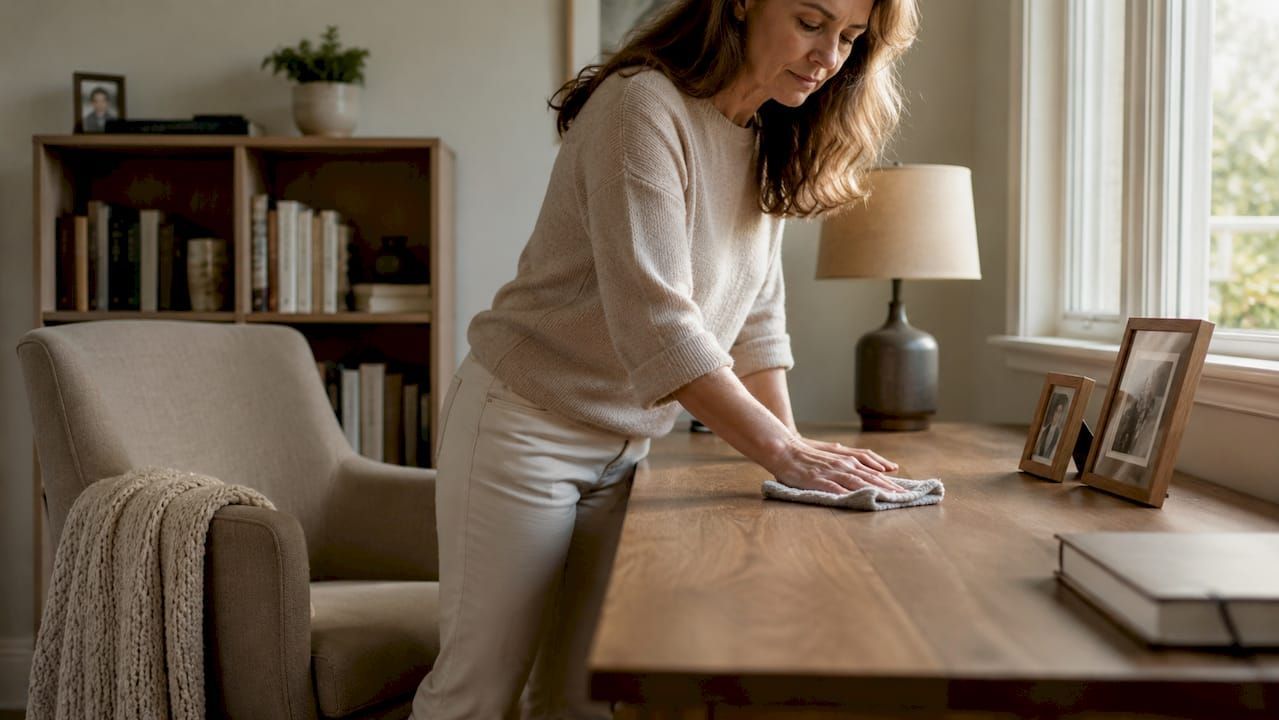
Cleaning is the systematic removal of dirt, grime, and allergens to maintain hygiene and comfort in your living space. Done well, it reduces the spread of bacteria, cuts allergen levels, and makes your home a genuinely pleasant place to be. The difference between a clean home and a merely tidy one comes down to method, the right products, and a schedule you can actually stick to. This guide covers all three, with practical steps for every room and advice on the mistakes that quietly undo your efforts.
What tools and products do you actually need for cleaning?
The best cleaning kit is a small one. Professional cleaners rely on a handful of multi-purpose products rather than a cupboard full of specialised sprays. A good multi-purpose cleaner, a disinfectant, a glass cleaner, and a toilet cleaner cover most tasks in any home.
For tools, you need microfibre cloths, a vacuum cleaner with attachments, a mop, a scrubbing brush, and a bucket. Microfibre cloths trap dust and bacteria rather than spreading them, which makes them far more effective than cotton rags. A vacuum with a HEPA filter is worth the investment if anyone in your household has allergies.
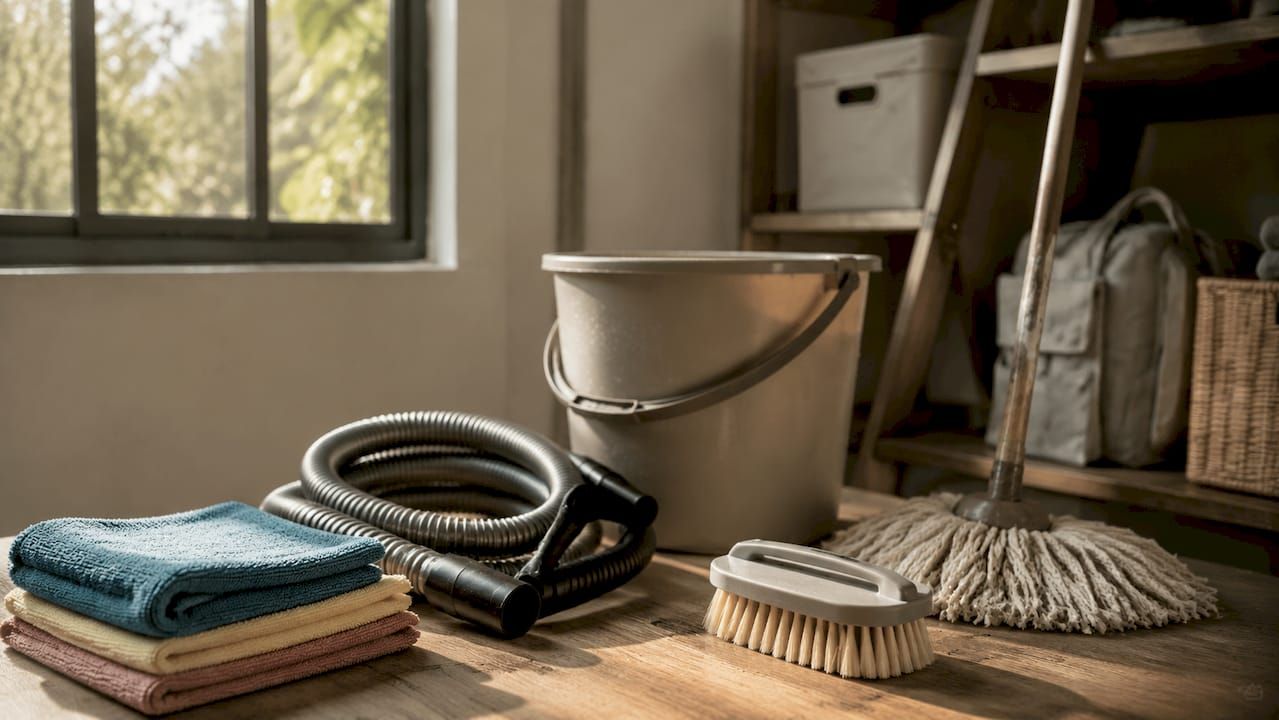
Two budget-friendly substitutes stand out. Melamine sponges remove stubborn marks from walls, skirting boards, and tiles at a fraction of the cost of branded alternatives. They work by acting as a micro-abrasive, lifting grime without chemicals. Dryer sheets attached to an extended duster capture fine dust and hair on ceiling fans and high shelves that a standard cloth cannot reach.
| Tool | Primary use | Notes |
|---|---|---|
| Multi-purpose cleaner | Surfaces, worktops, appliances | One product replaces many |
| Microfibre cloths | Dusting, wiping, polishing | Reusable and highly effective |
| Melamine sponge | Stubborn marks on hard surfaces | No chemicals needed |
| Vacuum with HEPA filter | Floors, upholstery, skirting boards | Traps allergens rather than releasing them |
| Dryer sheet on extender | High shelves, ceiling fans, baseboards | Reaches spots standard tools miss |
| Toilet brush and cleaner | Toilet bowl sanitation | Use with dwell time for best results |
Pro Tip: Mix equal parts white vinegar and water in a spray bottle for an effective, low-cost surface cleaner. It cuts grease well and leaves no chemical residue.
How do you build a cleaning schedule that actually works?
A cleaning schedule works when it matches your household's real life, not an idealised version of it. Experts recommend deep cleaning at least twice a year, with quarterly deep cleans for kitchens and bathrooms, and more frequent sessions for homes with children or pets. That frequency sounds manageable because it is, provided you handle smaller tasks daily.
The key principle is this: short daily actions prevent the build-up that makes deep cleaning feel like a project. Wiping down the hob after cooking, rinsing the sink, and a quick vacuum of high-traffic areas each take under five minutes. They stop grime from setting and mean your fortnightly clean takes half the time.
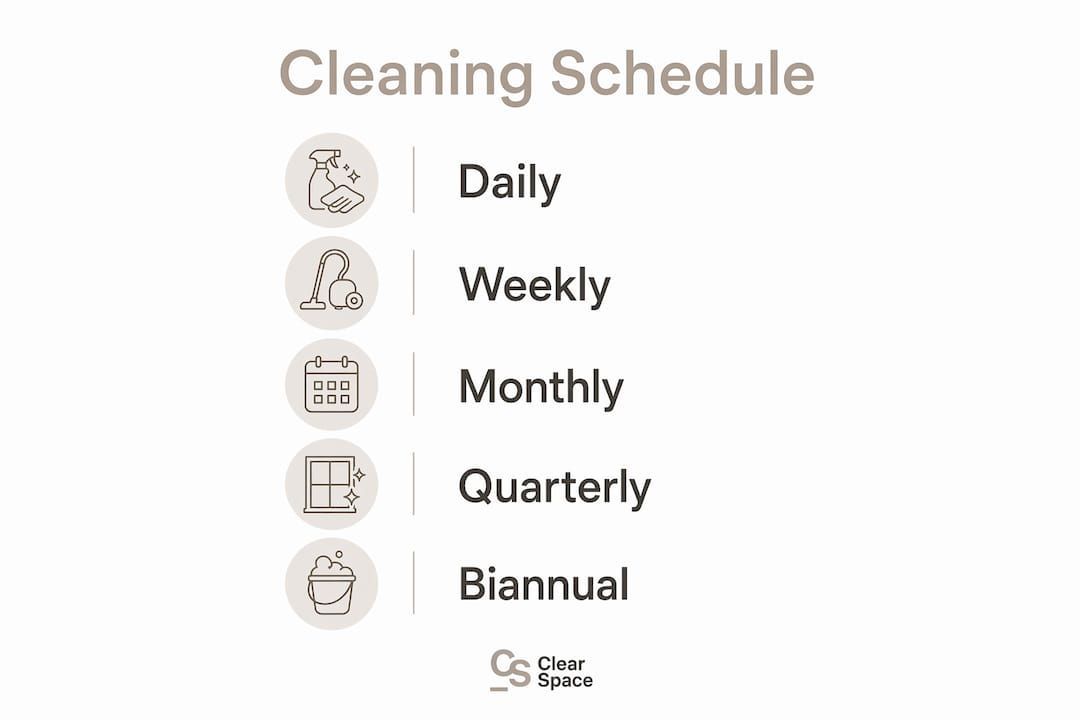
A structured cleaning checklist is the most practical tool for staying consistent. It removes the mental effort of deciding what to do next and lets you work through a space methodically. Checklists also allow you to multitask: apply a product, move to another task while it dwells, then return to wipe it off.
Here is a simple framework to build your own schedule:
- Daily (5–10 minutes): Wipe kitchen surfaces, rinse the sink, quick vacuum of main living areas, and tidy any clutter.
- Weekly (60–90 minutes): Full vacuum and mop, bathroom clean, kitchen appliance wipe-down, and dusting all surfaces.
- Monthly (2–3 hours): Clean inside the microwave and oven, wipe down cupboard fronts, wash bedding, and clean mirrors and windows.
- Quarterly: Deep clean bathrooms and kitchen thoroughly, including behind appliances and inside cupboards.
- Twice yearly: Full home deep clean, including carpets, upholstery, and areas that rarely get attention.
Pro Tip: Assign each room a day of the week rather than trying to clean the whole house in one session. Monday for bathrooms, Wednesday for the kitchen, Friday for living areas. The house stays consistently clean without any single session feeling like hard work.
Viewing cleaning as self-care rather than a chore reduces stress and makes consistency far easier to maintain. That reframe is not motivational fluff. It changes the way you approach the task and, in turn, how often you do it.
What are the step-by-step methods for cleaning key rooms?
Kitchen
Start at the top and work down. Wipe cupboard fronts, then move to the worktops, hob, and sink. Apply your multi-purpose cleaner and let it sit for two minutes before wiping. This dwell time breaks down grease and means you use less effort and less product.
Clean the inside of the microwave by heating a bowl of water with lemon juice for two minutes. The steam loosens splattered food, which wipes away with a cloth. Finish with the floor, sweeping first, then mopping.
Bathroom
Apply toilet bowl cleaner first and let it sit for up to five minutes before scrubbing. This dwell time is what makes the difference between a surface clean and genuine sanitation. After scrubbing, apply a second round of disinfectant and leave it to air dry rather than wiping it off.
Clean the basin, bath, and shower in the same top-to-bottom order as the kitchen. Spray tiles, leave to dwell, then scrub and rinse. Finish with the floor.
Living areas
Begin with dusting before you vacuum. Dust falls downward, so vacuuming first and then dusting simply puts debris back on the floor. Use a dryer sheet on an extender for ceiling fans and high shelves. Vacuum upholstery with the brush attachment, then do the floors.
| Room | First step | Key technique | Finish with |
|---|---|---|---|
| Kitchen | Cupboard fronts | Dwell time on surfaces | Mop floors |
| Bathroom | Toilet bowl cleaner | 5-minute dwell, second disinfectant | Air dry toilet, mop floor |
| Living area | Dust from top down | Dryer sheet for high spots | Vacuum floors and upholstery |
Pro Tip: Clean windows on a cloudy day, not in direct sunlight. Sunlight dries the cleaner before you can wipe it off, leaving streaks that are harder to remove than the original grime.
Common cleaning mistakes that reduce your results
The most frequent errors are not about effort. They are about technique. Applying too much cleaning product, ignoring dust build-up, and cleaning windows in direct sunlight all produce worse results than a careful, minimal approach.
- Using too much product. Excess cleaner leaves a sticky residue that attracts more dirt. Use the recommended amount and dilute where the label allows.
- Skipping dusting before vacuuming. Dust disturbed by a vacuum's airflow settles back on surfaces. Always dust first.
- Cleaning windows in sunlight. The heat dries the product instantly, leaving streaks. Overcast days give you time to wipe properly.
- Not letting products dwell. Wiping a disinfectant off immediately means it has not had time to kill bacteria. Read the label and wait.
- Cleaning in a random order. Moving back and forth across a room means you revisit areas you have already cleaned.
Professional cleaners use a clockwise pattern to work through each room systematically. Starting at the door and moving clockwise means every surface gets covered once, in order, without backtracking. It is a simple habit that makes a measurable difference to thoroughness.
Pro Tip: Before you start any room, do one clockwise scan to identify what needs doing. Then clean in the same clockwise direction. You will not miss a spot.
Key takeaways
Consistent cleaning requires the right tools, a realistic schedule, and correct technique applied in the right order.
| Point | Details |
|---|---|
| Keep your kit simple | A multi-purpose cleaner, microfibre cloths, and a HEPA vacuum cover most household tasks. |
| Schedule by frequency | Deep clean twice yearly, quarterly for kitchens and bathrooms, and do small daily tasks to prevent build-up. |
| Dwell time matters | Leaving disinfectants and cleaners to sit before wiping dramatically improves results. |
| Work top to bottom | Always dust before vacuuming and clean surfaces before floors to avoid redoing work. |
| Use the clockwise method | Moving clockwise through each room prevents missed areas and reduces cleaning time. |
Cleaning as a habit, not a chore: my honest view
I have spent years helping homeowners and tenants reset properties across Hertfordshire, and the single biggest factor in whether a home stays clean is not the products used. It is the mindset behind the habit.
Most people treat cleaning as something to catch up on. They let it build until it feels like a project, then spend a whole Saturday on it, feel exhausted, and repeat the cycle. The homes that stay genuinely clean are the ones where the occupants do small things consistently. A five-minute wipe-down after cooking. A quick vacuum on a Tuesday morning. Nothing dramatic.
The reframe that actually works is treating cleaning as something you do for yourself, not for the house. A clean kitchen makes cooking more enjoyable. A clean bathroom makes getting ready feel less rushed. When you connect the task to the benefit you personally experience, the motivation shifts. It stops being a duty and starts being a reasonable investment of ten minutes.
I also think people underestimate how much environment shapes behaviour. Put on a podcast or an audiobook before you start. It changes the experience completely. You stop watching the clock and start finishing rooms without noticing. Progress matters more than perfection. A room that is 80% clean today is better than a room that waits for the perfect Saturday that never comes.
— Ashlea
How Clearspaceherts supports your cleaning needs in Hertfordshire
Clearspaceherts provides end of tenancy cleaning across Hertfordshire, covering St Albans, Harpenden, Hemel Hempstead, Welwyn Garden City, Hatfield, and surrounding areas. Whether you are a tenant preparing to move out, a landlord resetting a property between tenancies, or a homeowner who simply needs a thorough clean, Clearspaceherts offers reliable, locally based support. The team works to a detailed checklist, so nothing gets missed and deposits are protected. If you are also managing a move, Clearspaceherts can combine moving home help with cleaning into one straightforward arrangement, saving you the effort of coordinating multiple companies.
FAQ
How often should you deep clean your home?
Deep cleaning is recommended at least twice a year for most homes, and quarterly for kitchens, bathrooms, and households with children or pets.
What is the most effective order to clean a room?
Start at the top and work downward, always dusting before vacuuming. Use a clockwise pattern to cover every surface without missing spots or repeating work.
Why does dwell time matter when cleaning?
Leaving a disinfectant or cleaner on a surface for the recommended time, typically two to five minutes, allows it to break down bacteria and grease. Wiping it off immediately reduces its effectiveness significantly.
What are the most common cleaning mistakes?
The most frequent errors include using too much product, cleaning windows in direct sunlight, and not allowing disinfectants to dwell. All three produce worse results than a careful, minimal approach.
What is a cleaning schedule template?
A cleaning schedule template divides tasks by daily, weekly, monthly, and quarterly frequency. You can find a structured approach using a home cleaning checklist to keep your routine consistent without relying on memory.